

You're probably in one of two situations right now. You're either replacing a program manager who kept status meetings running but never really controlled risk, or you're hiring the first true program lead for an AI initiative that has already outgrown ad hoc coordination. In both cases, the résumé won't save you. Plenty of candidates can talk about timelines, standups, and stakeholder updates. Far fewer can align research, product, platform, security, and go-to-market teams when the work is ambiguous and the technical path is still moving.
That's why program manager interview questions need to be tougher for AI and machine learning hiring than for ordinary delivery roles. The interviewer isn't just checking whether a candidate can “run projects.” The best interviews test cross-functional leadership, operating discipline, and business judgment. One industry analysis of 2026 program manager interviews found that behavioral questions make up 48% of all questions, while program management questions account for 41%, which shows how heavily interviews focus on leadership, execution, and collaboration rather than simple delivery mechanics in this program manager interview analysis.
If you're hiring for remote AI work, add one more layer. You need someone who can manage uncertain experimentation, production reliability, compliance concerns, and executive expectations without creating noise. Structured answers matter here. Amazon recommends preparing behavioral examples with the STAR method, and Coursera also recommends STAR for situational answers, which is useful because it forces candidates to present evidence instead of abstractions in Amazon's program manager interview prep guidance.
A good interview loop should tell you four things quickly. Can this person lead senior specialists without formal authority? Can they turn ambiguity into an operating plan? Can they spot risk early? Can they explain trade-offs in plain English?
One practical side note before you start interviewing. Senior hires are also being judged outside the interview room, so candidates who understand protecting your online identity often show stronger professional judgment overall.
1. Leadership & Team Management
The fastest way to expose a weak program manager is to ask about a team they didn't directly control. Strong candidates talk about influence, decision framing, and trust. Weak ones talk about “following up” and “keeping everyone honest.”
Ask this early: “Tell me about a program where engineering, product, and another function wanted different outcomes. How did you create alignment?” Then keep drilling. Who disagreed? What trade-off did they force? What did the candidate change in the operating model?
What strong answers sound like
A solid AI example is a candidate who had to align an ML engineer focused on model quality, a platform lead focused on reliability, and a product lead pushing for launch speed. The good answer isn't “I got them on the same page.” It's “I separated decision rights, documented launch criteria, and forced agreement on what had to be true before release.”
For remote teams, listen for async habits. Good program managers don't depend on meetings to create clarity. They create decision docs, status memos, escalation paths, and written owners.
- Look for team design thinking: Can they explain why a certain lead owned experimentation, while another owned production readiness?
- Look for conflict literacy: Do they distinguish healthy disagreement from political friction?
- Look for morale management: Can they keep senior people engaged when priorities shift?
Practical rule: If a candidate can't describe how they led through disagreement without relying on authority, they're not ready for an AI program with strong technical personalities.
Interview prompts that work
Use a mini-case instead of generic prompts:
- Scenario prompt: “You inherit a distributed AI team. Research wants to keep iterating. Product wants a launch date. Security wants tighter controls. What operating cadence do you put in place in the first month?”
- Follow-up prompt: “What would you write down versus discuss live?”
- Depth prompt: “How would you know trust is improving versus people just going quiet?”
One signal I like is whether candidates can explain how they manage senior experts who don't want project theater. The best ones usually reduce noise, tighten decisions, and make dependencies visible. That's the same discipline behind effective management in software development.
2. Project Planning & Execution
AI programs fail when planning pretends uncertainty doesn't exist. If a candidate gives you a clean Gantt-chart answer for messy ML work, keep probing. Good program managers plan in layers. They separate what's known, what's testable, and what's still exploratory.
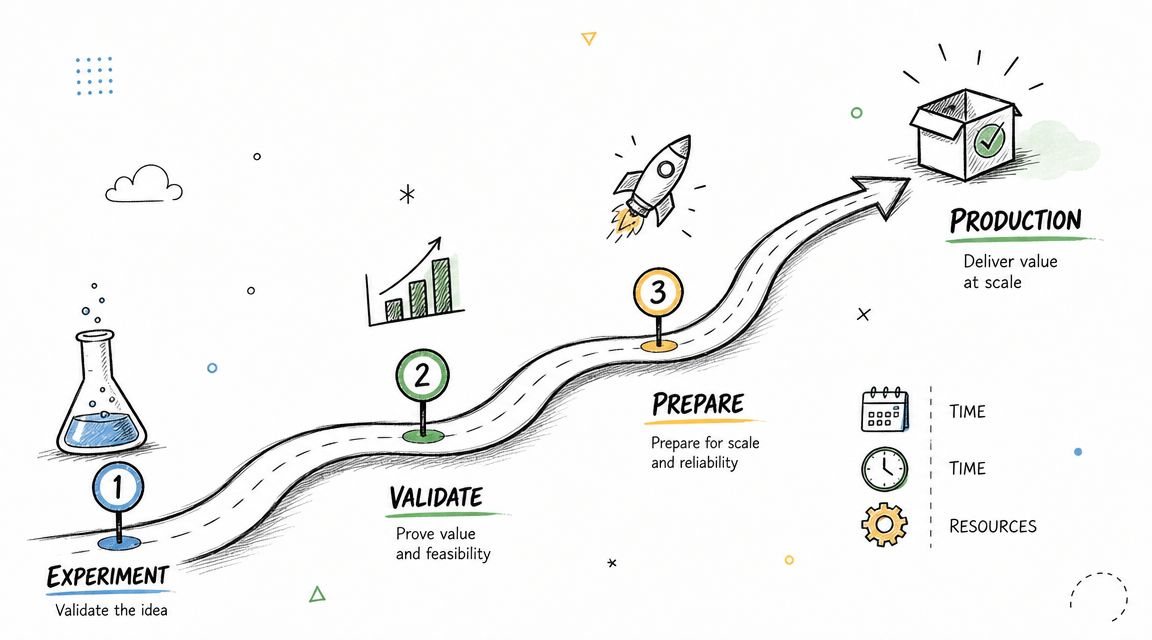
Ask: “How do you build a plan for an AI initiative when model performance, data quality, and deployment effort are all still uncertain?” Then listen for stage gates, not false certainty.
A practical planning pattern
A credible answer often sounds like this mini-case:
A team wants to launch an internal support copilot. The candidate splits the work into discovery, data readiness, evaluation design, pilot, and production hardening. They define exit criteria for each phase. They don't promise a fixed final scope before the first evaluation loop is complete.
That's better than a candidate who says they'd “estimate everything up front and track to plan.” In AI work, rigid upfront planning often hides risk until it's expensive.
Independent interview guidance also consistently emphasizes risk prioritization, unified dashboards, milestone control, and regular stakeholder check-ins for program management in Toptal's program manager interview guide. That's especially relevant when your AI roadmap spans data engineering, ML experimentation, and production operations.
Questions to separate operators from coordinators
- Execution prompt: “Walk me through a program plan you built where the technical path changed midstream.”
- Dependency prompt: “How did you track dependencies across data, infra, and product?”
- Recovery prompt: “When a milestone slipped, what changed in the plan besides the date?”
The strongest candidates usually describe milestone logic, ownership boundaries, and explicit escalation criteria. They can explain when they changed scope, when they protected it, and why.
If you want a useful benchmark for your own hiring loop, compare their answers against the discipline you'd expect in project management for software engineering. The difference is that AI planning needs even more room for structured learning, not less.
3. Technical Acumen & AI/ML Domain Knowledge
A program manager doesn't need to code. They do need enough technical depth to prevent nonsense from entering the plan. In AI hiring, that means they should understand the shape of the system, the operational implications of architecture choices, and where technical uncertainty changes delivery risk.
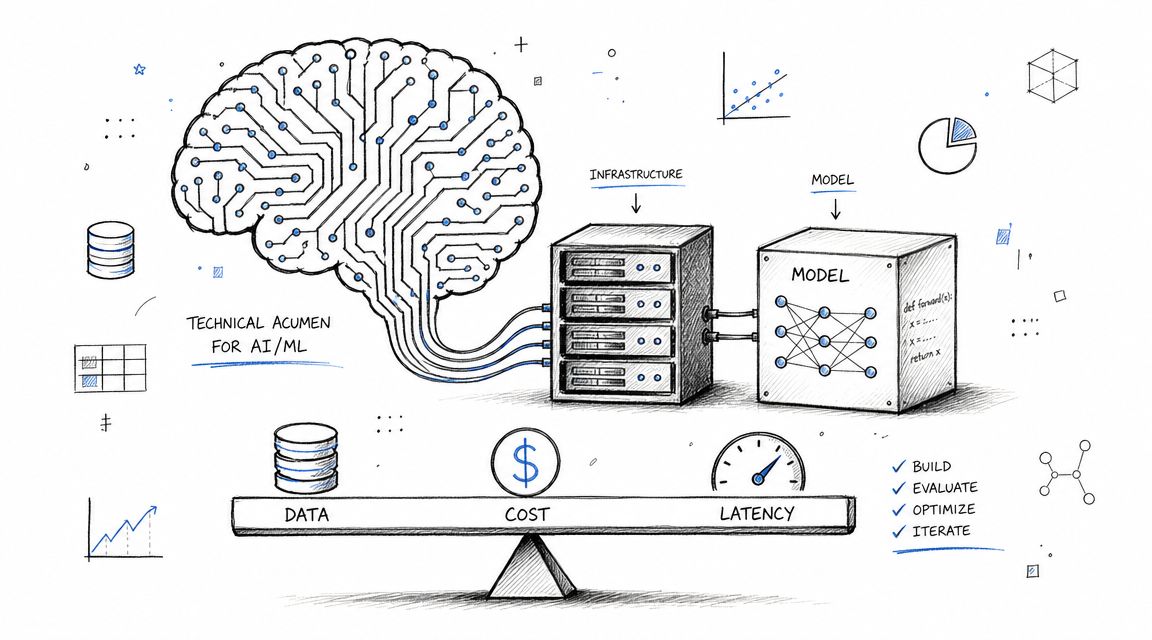
A simple test works well: “Explain when you'd choose retrieval-augmented generation versus fine-tuning, and what that choice changes for program execution.” You're not grading for perfect architecture. You're grading for whether the candidate understands that technical decisions change data requirements, evaluation design, deployment complexity, and operating cost.
What to listen for
Strong candidates talk in systems. They mention dependencies between data quality, model evaluation, monitoring, latency expectations, and stakeholder expectations. Weak candidates repeat jargon and collapse every AI initiative into “build a model and launch it.”
Coursera and Toptal both emphasize that strong program management answers should include concrete controls such as unified dashboards, milestone and dependency mapping, and measurable outcomes tied to program health in Coursera's program manager interview guidance. In practice, that means a strong technical program answer sounds operational, not conceptual.
A good mini-case here is a candidate who says a document intelligence project couldn't move from pilot to production until the team had confidence in ingestion quality, evaluation criteria, and fallback behavior when model output was uncertain. That answer shows they understand production AI is a system, not a demo.
A simple technical rubric
- Green flag: Explains trade-offs clearly and asks clarifying questions before choosing an approach.
- Yellow flag: Knows terms, but can't connect them to delivery implications.
- Red flag: Treats architecture as the engineering team's problem and can't discuss operational consequences.
Here's a useful way to pressure-test depth. Ask them to explain an architecture decision to both an ML lead and a CFO. The candidate should change the language, not the logic.
For a quick external benchmark on the kind of technical thinking many teams now expect in program roles, this short video gives a useful contrast between shallow and system-level answers:
4. Communication & Stakeholder Alignment
Most program managers sound polished in interviews. That's not the same as being clear. For AI initiatives, communication quality shows up in whether a person can reduce ambiguity without hiding risk.
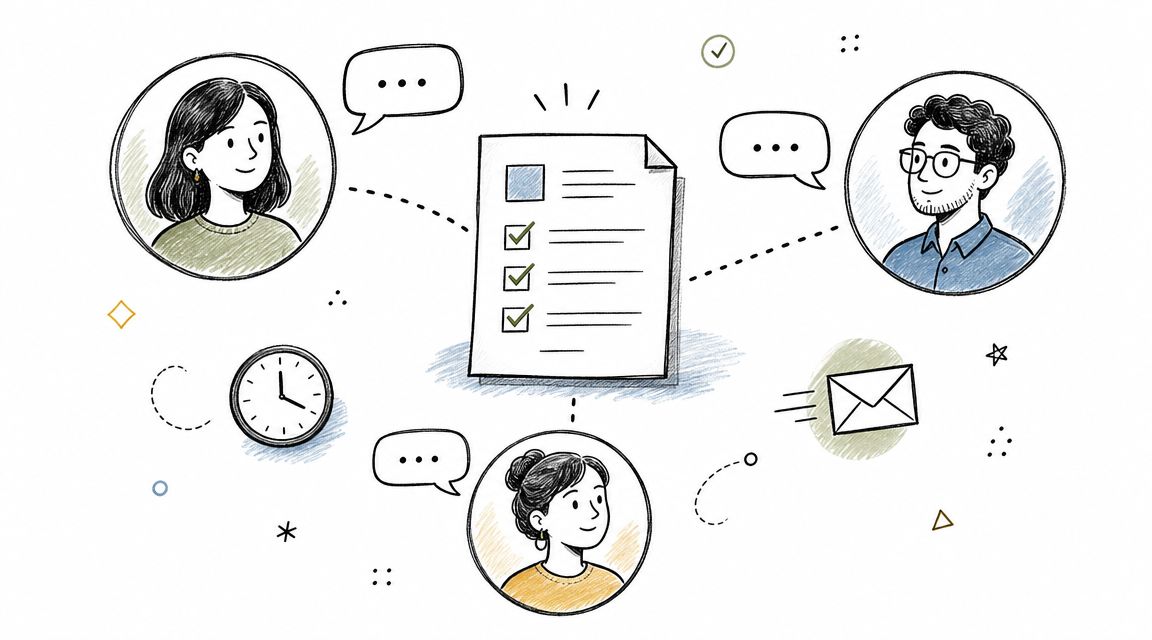
Ask for evidence, not self-description. “Show me how you communicated a difficult update on a technical program.” If possible, ask for a sanitized status memo, decision doc, or executive update. You'll learn more from one page of writing than from ten minutes of smooth talking.
What good written communication looks like
A strong written update usually includes four things. Current state, decision needed, risks, and owner. It doesn't bury the problem under a wall of context.
A useful mini-case is a model deployment that's blocked by data retention concerns. A weak communicator sends broad updates and waits for meetings. A strong one writes a concise note: what changed, why it matters, which decision is blocked, who must decide, and what the fallback path is.
Good program communication lowers coordination cost. Bad communication increases meeting load and still leaves decisions unclear.
Interview prompts worth using
- Translation prompt: “Explain a recent MLOps issue to me as if I'm a non-technical executive.”
- Writing prompt: “Draft the first five lines of an update after a pilot missed expectations.”
- Escalation prompt: “When do you escalate versus keep working the problem inside the team?”
The strongest candidates are transparent about trade-offs. They don't try to sound endlessly positive. They know that stakeholders can handle bad news if they get it early, framed clearly, and attached to options.
For remote teams, this matters even more. Written clarity becomes a force multiplier for operations. A candidate who can't communicate with precision will force your best engineers into translation work.
5. Problem-Solving & Decision-Making
Generic program manager interview questions cease to be useful. You need ambiguity tests. AI programs create them constantly. A benchmark model underperforms. A vendor tool looks faster but introduces lock-in. A product leader wants a promise before the team has enough evidence.
Ask something like: “Tell me about a decision you made with incomplete information that affected multiple teams.” Then don't let them skip the hard part. What information was missing? What assumptions did they make? What would have changed the decision?
A useful decision case
Consider a candidate managing an LLM feature with cost pressure from finance and quality pressure from product. A strong answer won't claim they found a perfect solution. It will show how they framed the trade-off, ran a limited test, set a review point, and made ownership explicit.
That's what real decision-making looks like in AI work. The best operators don't wait for certainty that never comes. They reduce uncertainty enough to act responsibly.
A second case that works well in interviews is a production issue where output quality degrades after a data change upstream. Strong candidates describe isolation, containment, stakeholder communication, and next-step decisions. Weak candidates jump straight to “we fixed it.”
How to probe beyond the headline
- Reasoning prompt: “What alternatives did you reject?”
- Constraint prompt: “What did you want to do but couldn't because of budget, time, or talent?”
- Retrospective prompt: “Would you make the same call again?”
Hiring signal: Strong candidates can explain why a reasonable person might have chosen differently. That shows judgment. Certainty theater usually hides shallow thinking.
You're looking for people who can structure messy problems, not just narrate outcomes. If every answer ends in success with no trade-off, keep pushing. Either the candidate is simplifying, or they weren't close enough to the decision.
6. Strategic Thinking & Roadmapping
A weak program manager optimizes the current quarter. A strong one helps you avoid building yourself into a corner. That matters in AI because tooling, governance, and platform choices accumulate. Small shortcuts can become large constraints.
Ask: “Walk me through an AI or data roadmap you shaped beyond a single release.” Then test whether the candidate understands sequencing. What had to come first? What was deferred on purpose? What infrastructure or policy work enabled later speed?
Roadmaps should show thesis, not just tasks
A credible roadmap for an AI organization often starts with narrower use cases, clearer evaluation criteria, and lightweight governance before broader platform investment. Another credible roadmap does the opposite if the organization already has strong platform maturity but fragmented adoption. The point isn't one universal pattern. The point is whether the candidate can explain the logic.
One useful answer pattern is a candidate who recognized that data quality and platform observability needed investment before scaling model use cases. Another is someone who chose managed tooling early to reduce complexity, while documenting when the organization should reconsider custom infrastructure.
If you're building a longer horizon plan, this is closely related to what a practical AI implementation roadmap should force you to answer. What are we proving, in what order, and what are we deliberately not building yet?
Questions for strategic depth
- Sequencing prompt: “What should a company build first if it wants multiple AI features, but doesn't yet have strong MLOps?”
- Trade-off prompt: “When would you choose short-term delivery over long-term platform investment?”
- Foresight prompt: “Tell me about a future bottleneck you anticipated and addressed early.”
This section is where seniority becomes obvious. Junior candidates usually describe projects. Senior candidates describe capability building, organizational constraints, and how today's decisions shape next year's execution.
7. Hiring, Recruitment & Team Building
For AI programs, hiring judgment is part of delivery judgment. A program manager who can't distinguish between roles, levels, and engagement models will create constant friction. You'll see it in mis-scoped reqs, weak interview loops, and bloated teams missing critical capabilities.
Ask directly: “How have you helped define who to hire, in what order, and for which kind of work?” Then test specifics. What belongs with an ML engineer versus a data engineer? When does a contractor make sense? When is a fractional specialist enough?
A practical hiring mini-case
Say you're launching an internal AI search product. The team has app engineers, but limited ML platform experience. A strong candidate might say they'd first clarify whether the core gap is retrieval quality, evaluation, data pipeline work, or deployment operations. Then they'd shape hiring around that bottleneck instead of reflexively opening a vague “AI engineer” role.
That's a meaningful answer because it ties talent decisions to execution risk.
Another strong sign is when the candidate talks about interview design. Good program managers help create scorecards that reflect the work. If the role requires production AI delivery, they won't accept a loop that mostly rewards polished theory.
What to test in the interview
- Role clarity: Can they define the difference between platform, model, and product-facing work?
- Evaluation maturity: Do they know how to assess technical depth without over-indexing on résumé prestige?
- Team shape: Can they explain when a lean specialist team beats a larger generalist team?
One common failure mode is hiring for breadth when the program really needs one deep operator. Another is hiring permanent staff before the work is scoped well enough to know which long-term roles are essential.
The best program managers don't just “participate in hiring.” They improve hiring quality by making work clearer.
8. Risk Management & Adaptability
This is one of the most revealing parts of the interview. Program management guidance consistently emphasizes listing risks, prioritizing them, tracking them visibly, and using regular stakeholder reviews to catch issues early. That's especially important when AI programs span multiple teams and changing requirements.
Ask a blunt question: “What could go wrong in this program?” Then stay quiet. Good candidates won't stop at technical risk. They'll cover people risk, compliance risk, dependency risk, and adoption risk.
What a mature risk answer includes
A strong answer usually has three layers. Detection, mitigation, and escalation. It's not enough to say “I track risks in a register.” You want to hear how they identify leading indicators, who owns mitigation, and when a risk becomes a leadership decision.
A practical example: a small ML team depends heavily on one engineer who understands the evaluation pipeline. A good program manager calls out key-person dependency, forces documentation, cross-training, and ownership backup before that dependency becomes a crisis.
Another example is AI governance. PMI's 2024 AI in Project Management report says 82% of project management professionals are already using AI, 91% say AI is important to project success, and only 31% say their organization has formal AI policies, which makes governance and operational controls a serious interview topic in this discussion of AI-related program manager interview questions.
Questions that expose weak risk instincts
- Monitoring prompt: “How do you know a program is drifting before a milestone is missed?”
- Governance prompt: “Where should human approval be required when teams use AI tools in delivery workflows?”
- Adaptation prompt: “Tell me about a time you changed the operating model because the original plan was no longer realistic.”
The red flag isn't that a candidate has seen failure. It's that they talk about failure as if it arrived without warning.
For AI programs, adaptability isn't improvisation. It's disciplined change under uncertainty.
9. Product Sense & Business Acumen
A technically fluent program manager can still fail if they don't understand why the work matters. AI teams are especially vulnerable to building technically interesting systems that don't change an important business outcome.
Ask: “What business decision did your last technical program support?” If the answer stays stuck in delivery mechanics, keep pressing. What user problem mattered? What trade-off did leadership care about? What would have made the work not worth doing?
Business-aware answers are concrete
A strong candidate can explain why a model with impressive benchmark behavior still wasn't good enough for the actual use case. Or they can explain why an internal workflow improvement mattered because it reduced review burden for an operations team. The point is that they connect technical effort to a business decision or operating improvement.
A good mini-case here is an AI assistant that looked promising, but the actual blocker was not model quality. It was low trust from the teams expected to use it. A business-aware program manager would adjust the rollout plan, add clearer human review, and redefine success around useful adoption rather than demo quality.
Prompts that reveal product judgment
- Value prompt: “How do you decide whether an AI initiative is worth continuing after an early pilot?”
- User prompt: “Tell me about a time user behavior forced a change in program scope.”
- Constraint prompt: “When is ‘good enough' good enough?”
The best candidates don't romanticize technical perfection. They understand that some AI features need high confidence and others need fast learning. That distinction changes roadmaps, staffing, and launch criteria.
If you're hiring for a role that partners closely with product leadership, this is also where adjacent reading on essential product management interview questions can sharpen the loop. Not because the jobs are the same, but because the best AI program managers think in product and execution at the same time.
10. Continuous Learning & Technical Growth
AI changes too quickly for static operators. You don't need a program manager chasing every trend. You do need someone who updates their mental model, learns from failure, and helps the team learn without turning the roadmap into chaos.
Ask: “What have you changed your mind about in AI or program management recently?” That question is better than “How do you stay current?” because it tests whether learning affects judgment.
What mature learning looks like
Good candidates can point to a technical or operating assumption they revised. Maybe they became more skeptical of broad platform bets before evaluation discipline was in place. Maybe they learned that a shiny new model didn't solve the actual bottleneck. Maybe they realized the team needed stronger postmortems and clearer documentation, not more tools.
Another useful prompt is: “Tell me about something your team learned the hard way.” You want to hear whether they create conditions for reflection, not blame. In remote AI teams, that often shows up as written retrospectives, architecture review habits, and time carved out for knowledge transfer.
Signals to look for
- Curiosity with discipline: They follow changes in AI, but don't rewrite the roadmap every time a vendor launches something.
- Applied learning: They can describe a process or decision that improved because they learned something.
- Teaching instinct: They help teams absorb new knowledge, not hoard it.
A practical mini-case is a team evaluating new retrieval approaches. A weak program manager lets the work sprawl. A strong one creates a bounded experiment, sets decision criteria, and turns the result into shared organizational knowledge.
People who can't articulate recent learning often struggle once the environment gets ambiguous. In AI, that's a problem immediately, not eventually.
Program Manager: Top 10 Interview Competencies
| Category | Implementation Complexity 🔄 | Resource Requirements ⚡ | Expected Outcomes 📊 | Ideal Use Cases 💡 | Key Advantages ⭐ |
|---|---|---|---|---|---|
| Leadership & Team Management | High, cross-functional & remote coordination | Moderate–High, senior hires, onboarding, processes | Strong team cohesion, faster scaling | Scaling distributed AI teams; fractional integration | Improves retention, alignment, morale |
| Project Planning & Execution | Medium, iterative with experimental variance | Moderate, planning tools, MLOps support | Predictable milestones; faster time-to-prod | Multi-phase AI projects; tight timelines | Balances experimentation with delivery |
| Technical Acumen & AI/ML Domain Knowledge | Medium, requires domain-informed decisions | Moderate, access to technical advisors/knowledge | Reduced miscommunication; better trade-offs | Projects with complex ML architecture choices | Enables informed technical trade-offs |
| Communication & Stakeholder Alignment | Medium, multi-audience tailoring needed | Low–Moderate, documentation & async tooling | Clear expectations; fewer escalations | Enterprise clients; remote-first teams | Speeds decisions; improves transparency |
| Problem-Solving & Decision-Making | High, ambiguity and first-principles thinking | Low–Moderate, data access, stakeholder input | Robust decisions under uncertainty | Novel ML problems; constrained resources | Produces defensible, prioritized choices |
| Strategic Thinking & Roadmapping | High, long-term trade-offs and vision | Moderate, cross-team coordination, analytics | Multi-quarter clarity; reduced rework | Building long-term AI capabilities | Aligns tech investments with business goals |
| Hiring, Recruitment & Team Building | Medium, sourcing and assessment design | High, recruiting pipeline, interviewers | Stronger hiring velocity and team fit | Rapid hiring for AI/ML roles | Improves team quality and diversity |
| Risk Management & Adaptability | Medium, requires foresight and contingencies | Low–Moderate, monitoring, backups, training | Fewer surprises; faster pivots | High-stakes launches; volatile budgets | Reduces failure impact; increases resilience |
| Product Sense & Business Acumen | Medium, translating metrics to requirements | Low–Moderate, user research, analytics | Higher ROI; business-aligned features | Startup productization of AI features | Ensures work drives measurable value |
| Continuous Learning & Technical Growth | Low–Medium, culture and time allocation | Low, learning resources, time budget | Faster skill growth; improved practices | Teams facing rapid AI tool changes | Attracts talent; prevents technical stagnation |
Your Next Steps to Hire an Elite Program Manager
If you take one thing from this guide, make it this. Don't run a generic interview loop for a role that will govern high-cost technical uncertainty. AI initiatives magnify every weakness in program leadership. Vague planning creates schedule drift. Weak communication creates stakeholder distrust. Thin technical judgment creates bad dependencies. Poor risk discipline turns solvable issues into executive escalations.
That's why your interview process should be structured around evidence, not charisma. Ask candidates for concrete examples. Push on operating detail. Look for decision quality under uncertainty. And require them to show how they communicate, not just say that they're strong communicators.
A practical hiring loop usually works best when it has distinct lenses:
- Behavioral leadership round: Test influence, conflict handling, and cross-functional trust.
- Execution round: Use a realistic AI mini-case with shifting requirements and visible dependencies.
- Technical judgment round: Probe architecture awareness, MLOps implications, and operational trade-offs.
- Communication round: Review a written update or ask for a live executive summary.
- Final synthesis round: Force prioritization across risk, resources, and business goals.
You should also calibrate by seniority. A junior or mid-level program manager may be capable of coordinating one bounded initiative with clear leadership support. A senior AI/ML program manager should be able to shape the operating model, expose risk early, and challenge unclear assumptions from product, engineering, and executives alike. If you're hiring for a critical initiative, don't blur those levels. Many expensive mis-hires start with a senior title attached to a coordinator's skill set.
Two simple rubrics help keep the loop honest.
First, score answers on specificity. Did the candidate name the actual conflict, decision, metric, risk, or document? Or did they stay at the level of values and process language?
Second, score answers on control. Did they show how they changed outcomes through structure, prioritization, escalation, and communication? Or were they mostly adjacent to the work while other people drove the hard calls?
The best candidates will usually show a pattern. They think in systems. They write clearly. They understand that AI programs need both experimentation and control. They can explain trade-offs without hiding behind buzzwords. And when something goes wrong, they don't narrate chaos. They describe detection, decision, and response.
If you're scaling an AI team quickly, you don't always have time to design this loop from scratch. That's where a partner with a strong technical hiring lens can help. ThirstySprout is one option if you need access to vetted senior AI talent, including program leaders who can operate across engineering, ML, and delivery in remote settings. The key is not just sourcing candidates. It's using a hiring kit that matches the complexity of the work.
Use these program manager interview questions as a playbook, not a script. The point isn't to hear rehearsed stories. It's to see how a candidate thinks when the program is ambiguous, the stakeholders disagree, and the AI roadmap has real business consequences.
If you're hiring for an AI initiative and want help evaluating senior program managers, ThirstySprout can support the search with vetted remote AI talent, practical hiring guidance, and teams that can plug into your roadmap quickly.
Hire from the Top 1% Talent Network
Ready to accelerate your hiring or scale your company with our top-tier technical talent? Let's chat.