

Stop Wasting Your Data Labeling Budget. Most ML teams still send batches to labelers with no acquisition logic, then wonder why spend climbs faster than model quality. Active learning is the fix. In education, active learning has repeatedly outperformed passive formats, including a large study showing exam scores that were 6% higher and failure rates 1.5 times lower in active environments. The same operating principle applies in MLOps. You get better outcomes when the system engages on the hardest, most informative examples instead of passively consuming everything.
For CTOs, the business case is simple. Labeling is one of the easiest places to waste budget because most unlabeled pools contain duplicates, edge cases with no product value, and routine samples your model already handles. An active learning loop changes the unit economics. The model asks for labels where they matter most, your reviewers spend time on examples that move the decision boundary, and your team gets a faster path to a deployable model.
This matters even more if you're training classifiers for fraud, support routing, document processing, computer vision QA, or moderation. In each case, the production problem isn't just model accuracy. It's annotation throughput, review quality, retraining cadence, and whether the whole loop fits your release process. Credit for Startups' free playbook is a useful companion if you're trying to stretch infrastructure and vendor budget while building that loop.
Below are 5 active learning strategies that work in practice, plus the MLOps trade-offs that decide whether they save money or create more pipeline complexity.
- Start simple: Use uncertainty sampling first if you already have a baseline classifier and a stable annotation workflow.
- Add guardrails: Measure queue quality, reviewer agreement, and model lift per labeled batch, not just final model metrics.
- Use the right acquisition logic: Different strategies fit different failure modes. Ambiguity, class imbalance, and dataset drift need different treatment.
- Build for operations: The best active learning system is the one your team can retrain, audit, and ship every week without heroics.
Who this is for
This is for CTOs, heads of AI, and platform leads who already have a labeling process and want better ROI from it. It's also for founders who have a promising model but can't justify labeling everything in sight.
If your team owns training pipelines, evaluation, annotation vendors, or data quality review, these active learning strategies belong in your backlog. If you're still choosing between feature work and data work, this guide should help you spend on the most impactful labels first.
Quick framework for choosing an active learning strategy
Pick the strategy based on the failure mode, not on what sounds advanced.
- Use uncertainty sampling: When you have a decent baseline model and want quick gains on a classification queue.
- Use query-by-committee: When one model's confidence is unreliable and you want more strong signal from disagreement.
- Use diversity sampling: When the dataset is repetitive, skewed, or drifting across customer segments.
- Use expected model change: When labels are expensive and you need to prioritize the examples most likely to alter training dynamics.
- Use a hybrid strategy: When you're running active learning in production and need both exploitation and exploration.
A simple implementation path looks like this:
- Define a seed set with known label quality.
- Train a baseline model and calibrate its outputs.
- Score the unlabeled pool with one acquisition function.
- Send the top batch to Label Studio, Scale AI, Snorkel Flow, or your internal review tool.
- Retrain, compare against a fixed validation set, and track cost per useful label.
- Repeat on a fixed cadence with human QA.
Operational rule: If you can't explain why an example entered the queue, you can't audit the system later.
1. 1. Uncertainty Sampling
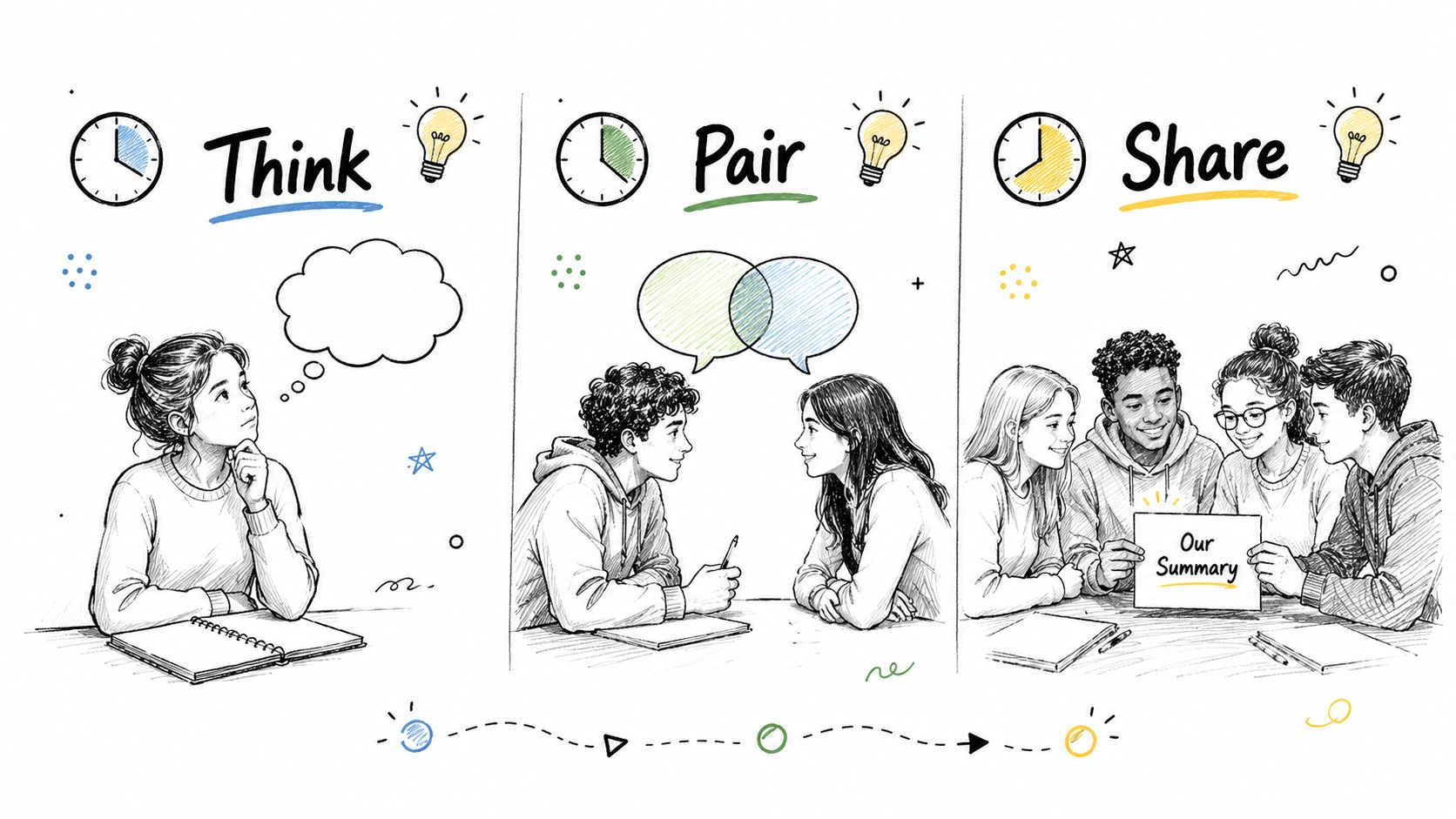
Uncertainty sampling is the workhorse. It's usually the first active learning strategy worth deploying because the logic is easy to explain to data scientists, reviewers, and finance. The model scores unlabeled examples, then requests labels for the ones it understands least.
That sounds basic, but it maps cleanly to business value. If your classifier is already confident on routine invoices, standard support tickets, or common product images, paying humans to relabel more of them doesn't buy much. The budget belongs on borderline cases.
What it looks like in production
For binary classification, the queue often comes from probabilities closest to 0.5. For multiclass work, you can use entropy or margin sampling. For transformer classifiers in Hugging Face, that usually means logging softmax probabilities, ranking by uncertainty, and exporting IDs into your annotation tool.
Mini-case: a document triage model routes inbound PDFs into claims, onboarding, compliance, and general ops. After the first seed model, the team doesn't label another random batch. They rank unlabeled documents by low confidence, sample across recent uploads, and send only the most ambiguous pages to reviewers. The queue is smaller, and the new labels usually expose where the taxonomy is weak or the OCR normalization is noisy.
Here is representative pseudocode for the loop:
- Score pool:
probs = model.predict_proba(unlabeled_x) - Rank uncertainty:
scores = 1 - np.max(probs, axis=1) - Select batch:
batch_ids = top_k(scores, k=batch_size) - Annotate and merge:
labeled_batch = labeling_queue(batch_ids) - Retrain:
model.fit(train_x + labeled_batch.x, train_y + labeled_batch.y)
Where teams get it wrong
The main trap is over-trusting raw confidence. Many models are badly calibrated. A deep classifier can be confidently wrong, especially after drift or class imbalance. If you're working with large language model classifiers, pair uncertainty with calibration checks and error slicing. This becomes even more important if you're planning to fine-tune LLMs for domain classification workflows.
A second trap is reviewer fatigue. The uncertain queue often contains messy examples. Low-resolution images, conflicting metadata, partial documents, and edge-case language all land there. If your annotation policy isn't explicit, uncertainty sampling can turn into a disagreement generator instead of a learning loop.
Active learning only pays off when the selected examples are both informative and labelable.
Use uncertainty sampling when you need a fast pilot. Don't use it as your only strategy when the unlabeled pool is highly repetitive or when confidence scores are unstable.
2. 2. Query-by-Committee (QBC)
Query-by-committee is what you use when one model's uncertainty isn't enough. Instead of asking, "What is this model unsure about?", you ask, "Where do several plausible models disagree?" That subtle shift matters in noisy, high-stakes datasets.
For CTOs, the upside is reliability. If a logistic regression model, an XGBoost model, and a transformer classifier all disagree on the same support ticket or transaction, you probably found an example worth paying a human to inspect. You're less dependent on one architecture's confidence quirks.
Why disagreement beats confidence in some pipelines
QBC works well when you have feature ambiguity, label noise, or multiple modeling choices under evaluation. A fraud pipeline is a good example. One committee member may over-weight graph features, another may lean on transaction sequences, and a third may focus on device signals. The examples that split the committee often expose either a valuable edge case or a policy problem in the labels themselves.
A practical setup can be simple:
- Build a small committee: Use models with different inductive biases, not five copies of the same network.
- Score disagreement: Vote entropy, KL divergence, or simple class-vote spread all work as queue features.
- Route exceptions: Send highest-disagreement items to your most senior reviewers, not the cheapest queue.
- Log rationale: Store committee outputs for every selected sample so QA can inspect why it was chosen.
Mini-case: a moderation team classifies marketplace listings into allowed, restricted, and blocked. Their first BERT-based classifier shows acceptable average quality but misses regional slang and policy nuance. A committee of BERT, LightGBM over text features, and a rules-backed weak model produces a disagreement queue that surfaces the exact samples policy ops needs to revise guidelines.
The trade-off you pay for
QBC is more expensive to operate than uncertainty sampling. You train and maintain multiple models, and you'll need stronger experiment tracking in MLflow, Weights & Biases, or SageMaker Experiments. The annotation queue also becomes harder to explain if your acquisition logic is opaque.
This strategy is strongest when model disagreement itself is product information. In a regulated workflow, disagreement can flag places where your policy, features, or label rubric still isn't stable.
One useful parallel comes from learning science. In one benchmark, active learning approaches were linked to a 33% reduction in examination achievement gaps and average course performance gains of half a letter grade. In ML operations, the practical takeaway is similar. Structured engagement beats passive accumulation, especially when a single passive signal hides important variation.
Practical check: If all committee members are trained on the same leaky features and same noisy labels, disagreement won't save you. It will just formalize the noise.
3. 3. Diversity Sampling
Some labeling programs don't suffer from uncertainty problems first. They suffer from sameness. The pool is dominated by near-duplicates, routine customer traffic, or one large account's data shape. Diversity sampling fixes that by selecting examples that broaden coverage rather than just maximize confusion.
This is the strategy I reach for when teams say, "The model looks good in aggregate, but fails on new customer segments." That's usually a representation problem. The model hasn't seen enough of the space.
What diversity sampling really buys you
Diversity sampling is an exploration strategy. It looks for underrepresented clusters, novel embeddings, unusual metadata combinations, or examples far from what you've already labeled. In practice, teams often compute embeddings, cluster the unlabeled pool, and sample across clusters rather than from one giant ranked queue.
Mini-case: a computer vision team inspects retail shelf images. Most of the corpus comes from a few stores with clean lighting and standard camera angles. Random labeling keeps feeding the model similar images. Diversity sampling based on image embeddings pushes fresh labels from dim aisles, crowded shelves, and odd device cameras into the training set. The model becomes more useful in the stores that were previously failing production review.
If your current feature set can't separate these conditions, revisit data representation before you spend more on labels. Here, a tighter view of feature engineering in machine learning systems can have more impact than another annotation sprint.
Good mechanics and bad mechanics
The good version of diversity sampling uses embeddings or domain-aware metadata. The bad version uses random spread and calls it diversity. If you're clustering text, sentence-transformer embeddings are usually more informative than bag-of-words for queue design. If you're clustering tabular data, normalize first and treat high-cardinality categorical fields carefully or your clusters will lie to you.
A useful production score blends several signals:
- Embedding novelty: Distance from the labeled set centroid or nearest labeled neighbor.
- Cluster coverage: Under-sampled clusters get priority.
- Business weighting: New market, new customer tier, or recent drifted segment gets a boost.
- Annotation feasibility: Skip examples that are novel but impossible to label consistently.
This strategy also lines up with what we know from stronger active environments. One analysis found that low-intensity active learning performed no better than traditional lecturing, while high-intensity designs that engaged learners for more than two-thirds of class time were linked to a 76% reduction in inequity and a 0.6 standard deviation exam improvement for minoritized STEM students. In ML terms, shallow token sampling isn't enough. You need sustained coverage of neglected regions in the data space.
Novel data isn't automatically valuable. Novel, frequent, and labelable is the sweet spot.
4. 4. Expected Model Change
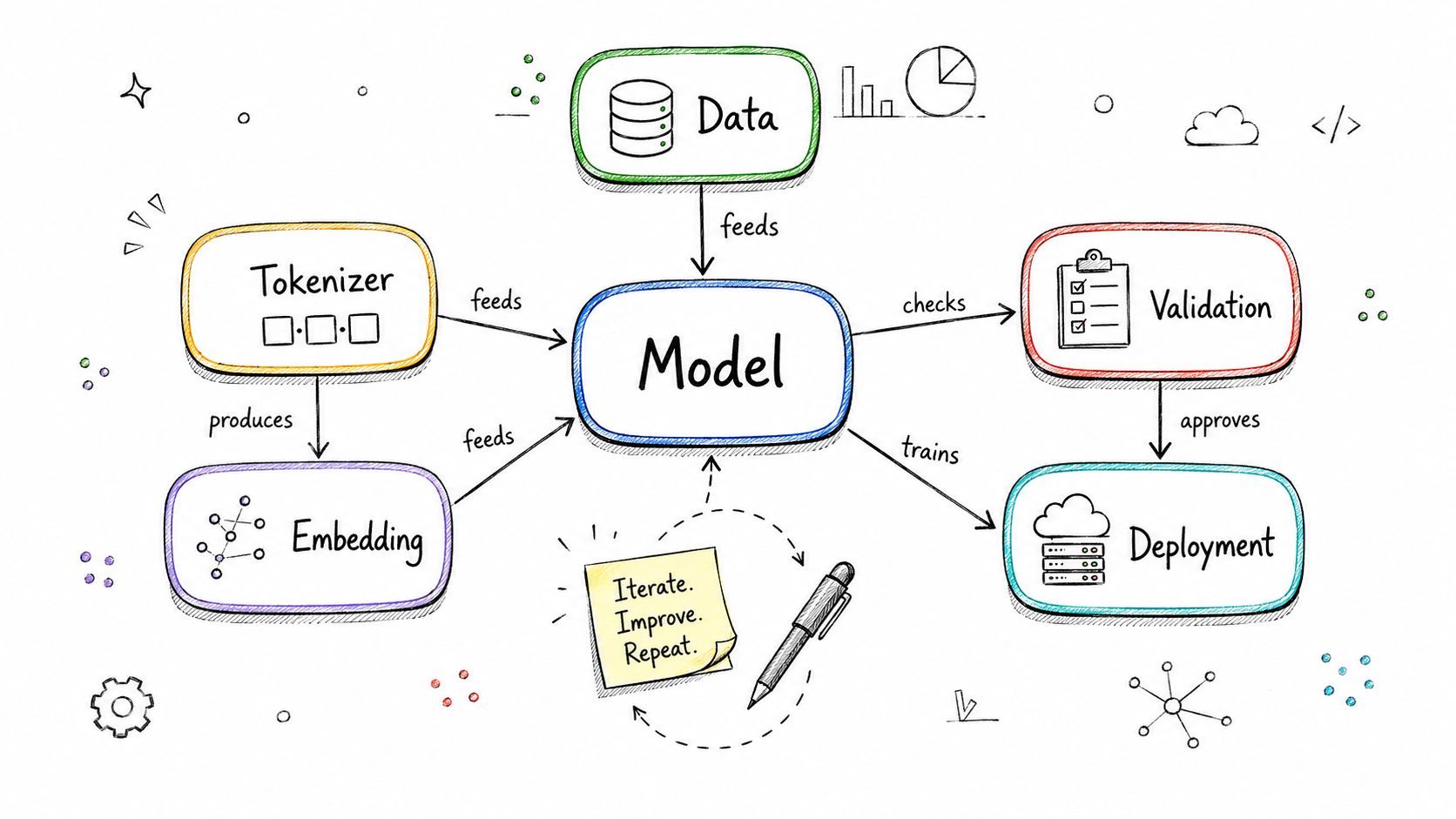
Expected model change is the most engineering-heavy strategy on this list. Instead of selecting points the model finds confusing or unusual, you estimate which unlabeled point would most change the model if you acquired its label and trained on it. That makes it attractive when labels are expensive and retraining capacity is limited.
For a CTO, this is the strategy to consider when every annotation dollar is scrutinized. The queue isn't "hard samples" in the abstract. It's "samples most likely to alter model behavior."
How teams approximate it
You usually won't compute exact expected retraining impact for every candidate because that gets expensive fast. Teams approximate it with gradient length, expected loss reduction, influence functions, or surrogate scoring from a smaller model. The implementation burden is real, but so is the control.
Representative pseudocode:
- Predict distribution:
p_y = model.predict_proba(x_u) - Estimate gradient by label:
g_y = grad(loss(model(x_u), y)) for y in labels - Compute expected change:
score = sum(p_y * norm(g_y)) - Acquire top batch: send highest-score examples for annotation
- Retrain and compare: track deltas on fixed eval sets and error slices
Mini-case: a medical document classifier has expensive expert reviewers. Random queues waste scarce specialist time. The team uses expected gradient norm to prioritize samples most likely to shift boundaries between closely related clinical categories. Fewer labels get requested, and specialists spend time where they can improve the model.
When this strategy is worth the complexity
Use expected model change when your labelers are domain experts, retraining is costly, or your model class is sensitive to a small number of critical examples. Don't use it when your infrastructure is immature. If you haven't already automated data lineage, model versioning, and rollback, this strategy will expose every weakness in your stack.
There is also a design lesson from broader active learning research. A recent synthesis argued that engagement doesn't come from format alone. It comes from authentic tasks, structured collaboration, and timely feedback, which are central to the proposed Active Learning Engagement Activation model. Expected model change follows the same principle in ML systems. Advanced selection only works when the surrounding loop is disciplined.
The acquisition function is only one part of the system. Label policy, reviewer routing, retraining cadence, and eval design decide whether the strategy works.
5. 5. Hybrid Strategy (Uncertainty + Diversity)
Most production teams end up here. Pure uncertainty can over-focus on one narrow frontier. Pure diversity can spend too much budget exploring rare corners with little product impact. A hybrid strategy balances both. It keeps pressure on the model's blind spots while making sure the labeled set doesn't collapse into a tiny slice of the distribution.
This is the active learning strategy I recommend when you're moving from pilot to repeatable operations. It is more forgiving under drift, class imbalance, and multi-tenant product data.
A production recipe that works
One common pattern is two-stage selection. First, filter the pool by uncertainty to remove easy examples. Then re-rank the remaining set by diversity so the batch covers multiple clusters, customers, or time periods. Another pattern uses a weighted score such as alpha * uncertainty + beta * novelty, with coefficients tuned per task.
Mini-case: a customer support classifier routes tickets into billing, cancellation, outage, and technical issue categories. During launch month, uncertainty sampling works fine. Three months later, a new enterprise segment sends jargon-heavy tickets and one large client floods the queue with similar billing threads. The team switches to a hybrid acquisition policy. High-uncertainty items still enter the queue, but diversity constraints stop one account from consuming the whole annotation budget.
What to measure besides model quality
Hybrid systems need better telemetry than one-number accuracy. Track the active learning system itself.
- Queue quality: How many selected examples are accepted by reviewers as labelable and useful?
- Coverage quality: Are batches spread across clusters, customers, and recent time windows?
- Learning efficiency: Does each new batch improve fixed-slice evaluation more than a random baseline?
- Ops reliability: Can you rerun the full loop, reproduce the batch, and audit who labeled what?
MLOps discipline matters most. You need data versioning, annotation provenance, scheduled retraining, and batch-level evaluation. If your stack doesn't support that yet, review these MLOps best practices for production ML systems before you roll active learning into a critical workflow.
There is a broader reason hybrid approaches tend to hold up. Active learning has also been validated as a practical method in other high-feedback environments. One market analysis projected the global active learning market at USD 2.8 billion in 2024, with platform-specific markets at USD 4.15 billion, reflecting how widely teams are investing in systems that concentrate human effort where it matters.
"Don't optimize the model in isolation. Optimize the human-in-the-loop system."
5-Strategy Active Learning Comparison
| Strategy | 🔄 Implementation Complexity | ⚡ Resource Requirements | ⭐ Expected Effectiveness | 📊 Expected Outcomes / Business Impact | 💡 Ideal Use Cases / Tips |
|---|---|---|---|---|---|
| 1. Uncertainty Sampling | Low, simple selection loop 🔄 | Low, single model inference ⚡ | High for typical classification tasks ⭐ | Rapid gains; large labeling savings (40–70%) 📊 | Baseline approach; use with limited compute or as first pass 💡 |
| 2. Query-by-Committee (QBC) | Medium–High, manage ensemble & diversity 🔄🔄 | High, train & infer N models ⚡⚡ | Often better than single-model uncertainty; more robust ⭐⭐ | Higher accuracy per label; reduces silent failures in critical apps 📊 | Use in high-stakes domains or when single-model confidence is unreliable 💡 |
| 3. Diversity Sampling | Medium, embedding + clustering pipeline 🔄 | Medium–High, embed all unlabeled data, clustering ⚡⚡ | Good for coverage and cold-starts ⭐ | Reduces bias and edge-case failures; improves robustness 📊 | Start projects or hybridize with uncertainty; quality depends on embeddings 💡 |
| 4. Expected Model Change | High, simulate training/gradients for candidates 🔄🔄🔄 | Very High, compute-intensive per candidate ⚡⚡⚡ | Theoretically strongest but compute-limited ⭐⭐⭐ (practical constraints) | Maximum label efficiency for small models; costly otherwise 📊 | Best for research or small/high-risk models; impractical for large DL in production 💡 |
| 5. Hybrid (Uncertainty + Diversity) | Medium–High, two-stage selection to orchestrate 🔄🔄 | Medium, cheap pre-filter then diversity on subset ⚡⚡ | Highest practical performance in production ⭐⭐⭐ | Best trade-off: labeling cost, performance, and robustness 📊 | Go-to for mature systems; tune pre-filter size (N) and final batch (K) 💡 |
Deep dive on trade-offs, alternatives, and pitfalls
The fastest way to kill ROI is to treat active learning as only a sampling algorithm. It's a system. The acquisition function selects work, but the business outcome depends on four linked layers: data curation, annotation operations, retraining, and evaluation.
The first pitfall is weak labels. If your annotators don't share a rubric, active learning can amplify disagreement because it sends the messiest items to humans first. That's why I prefer frequent formative review with explicit performance criteria. The same pattern appears in Ability-Based Education, where instructors define outcomes first, then build practice and feedback loops around them through frequent formative assessment and clear performance criteria. Your labeling program needs the same discipline.
The second pitfall is optimizing for perceived progress instead of measured progress. Teams often feel better when annotation throughput is high, but throughput alone isn't learning. In one study discussed by Harvard, students in lectures felt they learned more, yet they scored higher on tests after active learning sessions. ML teams make the same mistake. A large random queue feels productive. A smaller, harder queue often produces better model movement.
A scorecard you can use this week
Use this scorecard for each active learning batch:
- Acquisition quality: Was each selected sample uncertain, diverse, disputed, or high-impact for a known reason?
- Annotation quality: Did reviewers agree, and were escalation paths used for ambiguous samples?
- Training impact: Did the batch improve the fixed validation set and the slices that matter to the business?
- Operational cost: How much reviewer time, retraining time, and engineering time did the batch consume?
- Deployment readiness: Is the resulting model version reproducible, signed off, and easy to roll back?
Example architecture for a practical loop
A lean implementation can look like this:
- Data layer: S3 or GCS for raw assets, plus a feature store or parquet snapshots for scored examples.
- Scoring layer: Batch jobs in Airflow, Prefect, SageMaker Pipelines, or Kubeflow to compute acquisition scores.
- Annotation layer: Label Studio, Scale AI, or an internal tool with reviewer roles and audit logs.
- Training layer: MLflow for experiment tracking, plus CI jobs that retrain on merged labeled data.
- Evaluation layer: Fixed validation set, slice-based reports, and approval gates before promotion.
- Serving layer: Canary deployment with rollback if post-deploy error review spikes.
That architecture isn't glamorous, but it is what makes active learning repeatable. If your pipeline can't preserve batch provenance, compare strategies, and support human QA, even a clever acquisition function won't help for long.
Your 3 Steps to Implement Active Learning
Active learning isn't just a theoretical concept. It's a practical framework for building better models with less data. The strongest evidence from education points in the same direction. A meta-analysis of 226 studies found active learning reduced student failure rates by 55% compared with traditional lectures. In ML, the parallel is straightforward. Systems that focus effort on feedback-rich examples usually outperform systems that process data passively.
- Benchmark Your Current Labeling: Calculate your cost-per-label and track model performance against the number of labeled examples. This baseline is essential for measuring ROI.
- Start with Uncertainty Sampling: Implement a simple uncertainty-based active learning loop for one of your classification models. The tools exist today to integrate this with your existing MLOps stack and labeling provider.
- Find the Right Talent: Building and maintaining production active learning systems requires specialized MLOps and ML engineering skills. If your team lacks this expertise, you can't afford to wait months to hire. ThirstySprout connects you with vetted, senior AI and MLOps engineers who can build these systems in weeks.
My practical advice is to avoid over-design at the start. Pick one workflow with measurable business value, such as document routing, support triage, or moderation. Stand up one acquisition strategy, one annotation path, and one evaluation dashboard. If the batch quality is good and retraining is repeatable, then add hybrid logic and richer routing.
The teams that get value fastest do three things well. They define a stable label policy. They track system metrics, not just model metrics. And they budget engineering time for the loop itself, not just the model artifact.
If you're operating under startup pressure, this is one of the few ML improvements that can affect budget and quality at the same time. You don't need to label everything. You need to label what changes the model.
ThirstySprout helps startups and enterprise teams hire senior AI engineers, ML engineers, and MLOps specialists who can build production active learning pipelines, tighten labeling operations, and ship reliable retraining loops fast. If you need hands-on operators instead of resumes, start a pilot with ThirstySprout.
Hire from the Top 1% Talent Network
Ready to accelerate your hiring or scale your company with our top-tier technical talent? Let's chat.