

TL;DR: The 3-Step Framework for High-Performing Remote Teams
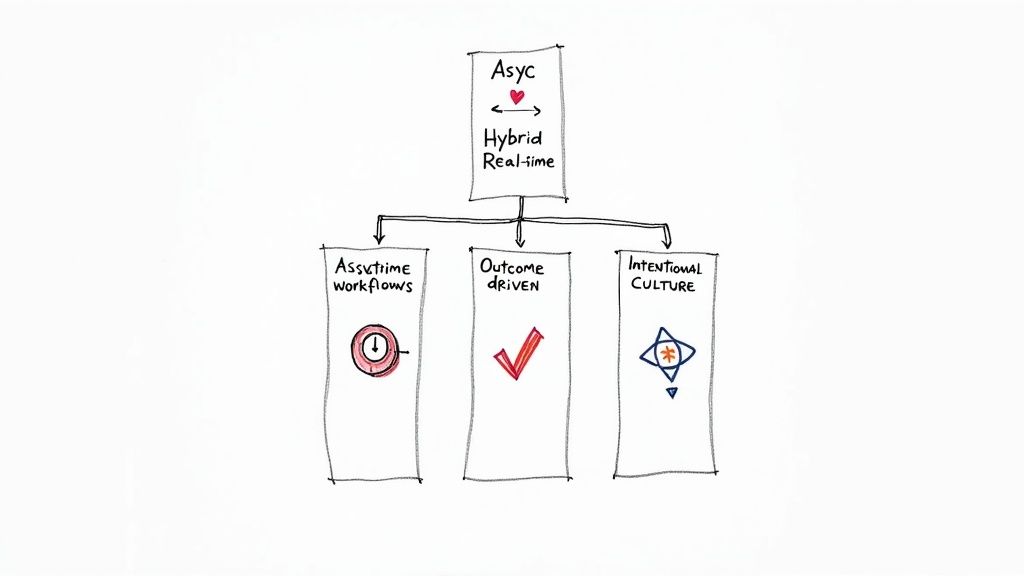
- Adopt an Asynchronous-First Operating Model: Shift your default from meetings to written communication. Use tools like Notion for documentation and Loom for walkthroughs. This protects engineer focus time and improves clarity across time zones.
- Measure Outcomes, Not Hours: Stop tracking online status. Instead, focus on engineering Key Performance Indicators (KPIs) like Cycle Time, Deployment Frequency, and Change Failure Rate. Use Objectives and Key Results (OKRs) to align team efforts with business impact.
- Build Culture Intentionally: Remote culture doesn’t happen by accident. Create deliberate rituals for connection (like "no-work" huddles), establish a structured onboarding plan (30-60-90 days), and rotate meeting times to be inclusive of all time zones.
Who This Guide Is For
This playbook is for technology leaders—CTOs, VPs of Engineering, and Founders—who need to hire, manage, and retain elite remote AI and software engineering teams. If you need actionable frameworks to improve velocity, reduce burnout, and ship high-impact products with a distributed team, this is for you. We focus on the practical steps you can implement within weeks, not months.
A Quick Framework: The Async-First Operating Model
The biggest mistake leaders make is trying to manage remote teams with an in-office mindset. Success requires redesigning your processes for trust, clarity, and autonomy—not just buying new collaboration software.
Your first decision is to choose a management model that fits your team's function. Are they shipping a core product or responding to live incidents? The answer changes everything.
Remote Management Model Decision Framework
Most high-performing engineering teams land on a Hybrid-Async model. It provides long blocks of uninterrupted focus time while allowing for scheduled, high-value synchronous collaboration.
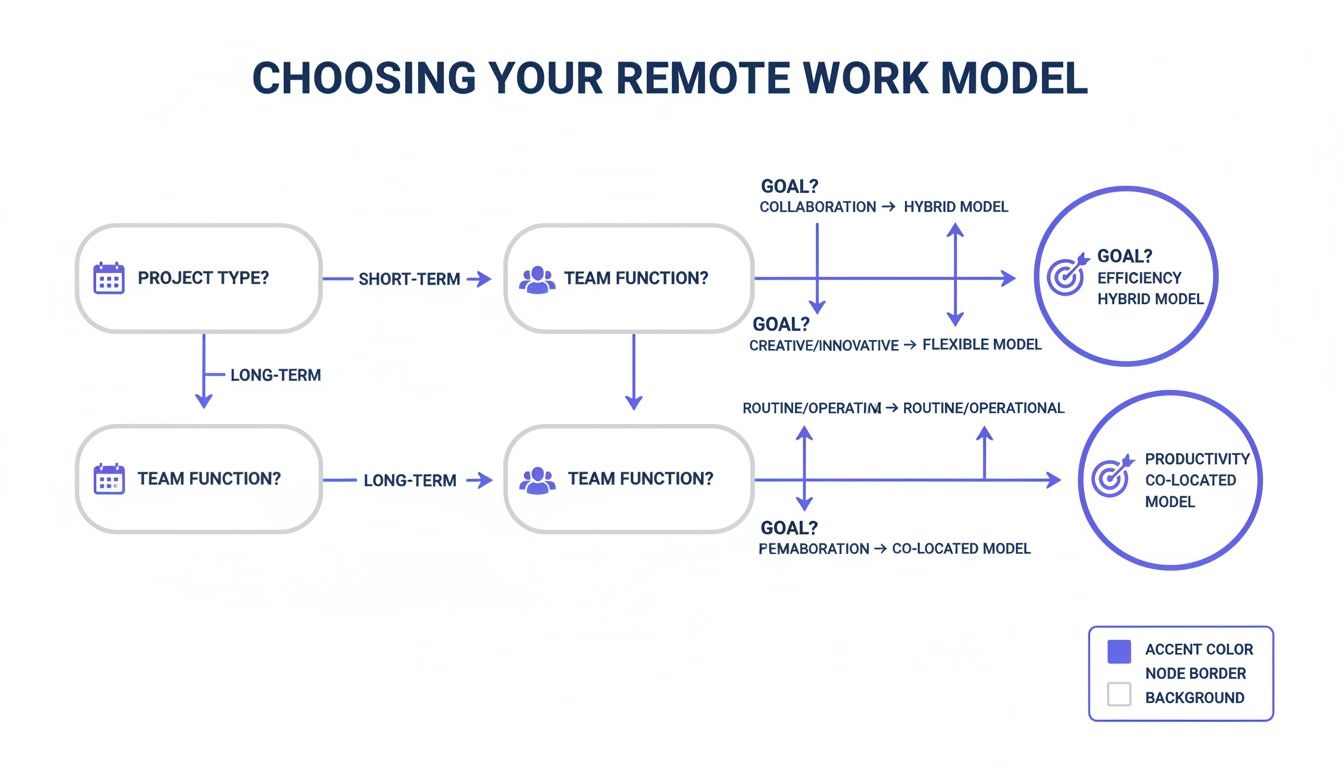
This flowchart can help you visualize how to pick the right remote model based on your project needs, team dynamics, and overall goals. The key is to be intentional, balancing deep work with the collaboration your projects demand.
Two Practical Examples You Can Use Today
Knowing how to manage remote teams effectively requires practical tools, not just theory. Here are two examples we use at ThirstySprout to ensure our remote teams are aligned and productive.
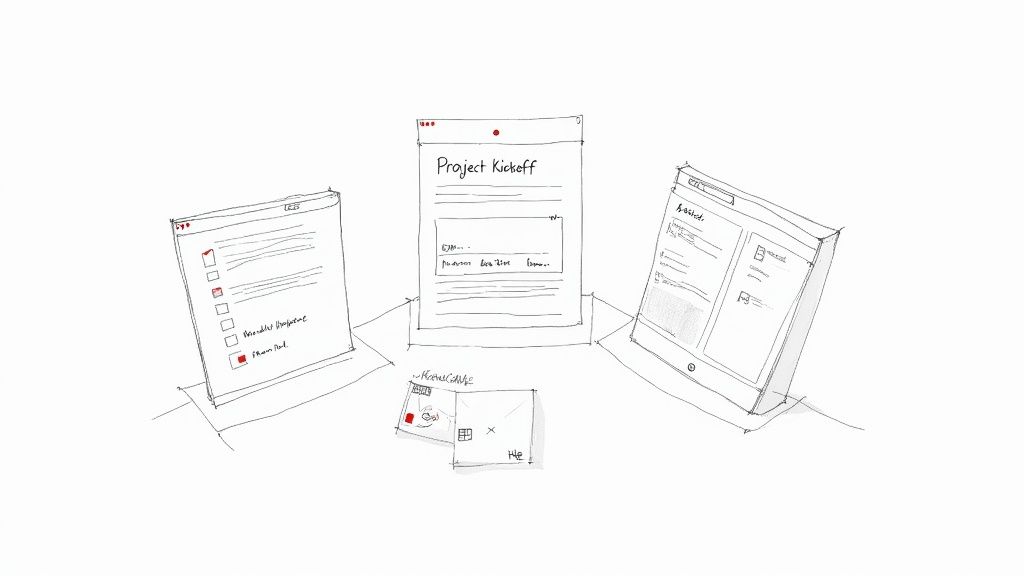
Example 1: The Async Project Kickoff Document
Replace your one-hour kickoff meeting with a detailed project brief in Notion. This forces clear thinking and allows team members across time zones to contribute thoughtfully.
A solid kickoff doc must include:
- Background & Problem: Why are we doing this? What specific business problem does this solve? (1-2 paragraphs max).
- Proposed Solution: A high-level summary of the technical approach.
- Scope (In/Out): Explicitly state what is included and, more importantly, what is not included. This prevents scope creep.
- Roles & Responsibilities: Who is the Directly Responsible Individual (DRI)? Who needs to be consulted?
- Timeline & Milestones: Key dates and deliverables.
- Open Questions: A section where anyone can ask questions, creating a living FAQ for the project.
This single document becomes the source of truth, saving hours of meetings and preventing miscommunication.
Example 2: The Remote Competency Scorecard for Hiring
Standard interview questions fail to predict remote success. Use a scorecard to evaluate candidates on the traits that matter: written communication, autonomy, and asynchronous collaboration.
This simple framework shifts hiring from "gut feel" to a data-driven process focused on finding engineers who will thrive in your remote setup. When you're ready to start hiring, see our guide on how to hire remote AI developers.
Deep Dive: Trade-offs and Common Pitfalls
Even with a solid framework, remote management presents unique challenges. Here’s how to navigate the most common pitfalls.
Pitfall 1: Burnout and Isolation
In a remote world, the line between work and home blurs, making burnout a serious risk. Research from Gallup shows that while remote work can boost engagement, managers must be more intentional about wellbeing.
Trade-off: You trade serendipitous office interactions for structured, deliberate connection.
Solution: Schedule unstructured, "no-work" time. A 30-minute weekly huddle with no project updates allowed creates space for genuine human connection. This builds the trust required for effective collaboration.
Pitfall 2: Proximity Bias in Hybrid Teams
When some team members are in an office and others are remote, it's easy to favor those you see in person. This "proximity bias" can kill morale and lead to high turnover among your remote talent.
Trade-off: You trade the convenience of in-person meetings for the discipline of remote-first communication.
Solution: If one person is on a video call, everyone is on a video call—even if they're in the same room. All major decisions must be documented in a shared tool like Notion, not made in a hallway conversation. This levels the playing field.
Pitfall 3: Ineffective Onboarding
You can't just ship a laptop and hope for the best. A weak remote onboarding process leads to disengagement and slow ramp-up times.
Trade-off: You trade informal "learning by osmosis" for a highly structured, documented onboarding journey.
Solution: Implement a 30-60-90 day plan. The first 30 days focus on systems access, meeting the team, and shipping a small, low-risk piece of code. This builds confidence and momentum from day one.
Checklist: Your Remote Team Management Toolkit
Use this checklist to audit and improve your remote management practices.
Communication & Collaboration
- We have a written guide defining which tool to use for which type of communication (e.g., Slack for urgent, Notion for permanent docs).
- Project updates are delivered asynchronously by default (e.g., weekly snippets, not status meetings).
- All significant decisions and their rationale are documented in a central, searchable location (Notion, Confluence).
- We use async video tools like Loom for code walkthroughs and demos.
Performance & Growth
- We track outcome-oriented engineering KPIs (e.g., Cycle Time, Deployment Frequency) instead of activity metrics.
- Team and individual goals are set using a framework like OKRs, connecting work to business objectives.
- One-on-ones are focused on growth and blockers, not status updates, using a shared agenda.
- Our hiring process explicitly tests for remote competencies like written communication and autonomy.
Culture & Wellbeing
- We have a structured 30-60-90 day onboarding plan for every new remote hire.
- We schedule regular, unstructured social time for the team to connect as people.
- Team meeting times are rotated to accommodate different time zones fairly.
- We actively solicit feedback on our remote processes through surveys or retrospectives.
What to Do Next
- Audit Your Current Processes: Use the checklist above to identify the single biggest gap in your remote management system. Is it your meeting culture? Your onboarding process?
- Implement One Change This Week: Pick one item to fix. For example, cancel one recurring status meeting and replace it with an async update template. Small wins build momentum.
- Build Your Remote Talent Pipeline: If you need to scale your team with engineers who already excel in a remote environment, explore how we can help.
Ready to build your elite remote AI team? ThirstySprout delivers vetted, senior AI and software engineers who can integrate with your team and start delivering value in days. Start a Pilot and see the difference.
References & Further Reading
- Asynchronous Communication: A deep dive into asynchronous learning principles for remote teams.
- Hiring Metrics: A guide to defining and tracking quality of hire metrics for engineering roles.
- Project Management Tools: Official documentation for Linear and Jira.
- Source Control: Best practices from GitHub.
Hire from the Top 1% Talent Network
Ready to accelerate your hiring or scale your company with our top-tier technical talent? Let's chat.