

AI-focused software engineers earned about $245,000 per year on average in 2025, and that headline only makes sense once you split base pay from total compensation. In practice, the market pays for AI engineers with a mix of salary, bonus, and equity, so a $134,023 base, a $184,757 base, a $211,243 total package, and a much larger $293,000 total package can all sit in the same market conversation.
What matters for your offer is not the shiny headline. It's the level, the geography, and whether you're hiring someone to prototype, ship production systems, or own the deployment loop.
What AI Engineers Actually Earn in 2026
The number you should anchor on
If you're hiring in the US, start with $245,000 as the modern AI engineer anchor point, because that's where AI-focused software engineers landed on average in 2025 in Levels.fyi data. From there, stop asking “what does an AI engineer make” and start asking what kind of compensation the source is describing.
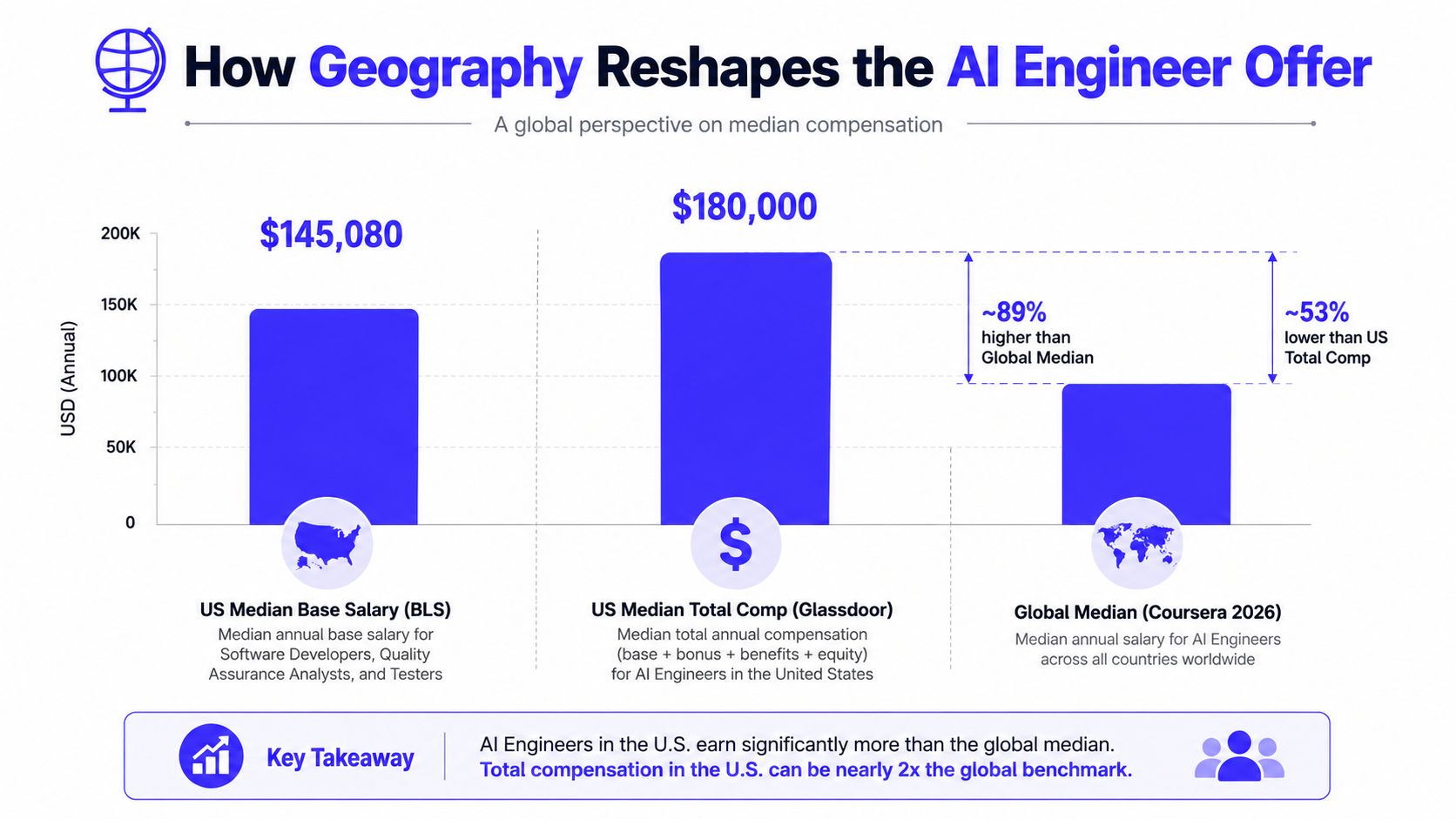
Built In reports an average US base salary of $184,757, average additional cash compensation of $26,486, and average total compensation of $211,243 for AI engineers, while a separate 2026 guide citing Levels.fyi data puts average total compensation at about $293,000 across 9,500+ self-reported profiles. Coursera's 2026 guide also cites a US median salary of $145,080 from the U.S. Bureau of Labor Statistics and a US median base salary of $134,023 from Glassdoor-based figures, which is why salary articles often look contradictory when they aren't.
| Source | Metric | Value | Sample |
|---|---|---|---|
| Levels.fyi | Average pay for AI-focused software engineers | $245,000 | 2025 analysis |
| Built In | Average base salary | $184,757 | US AI engineer page |
| Built In | Average additional cash compensation | $26,486 | US AI engineer page |
| Built In | Average total compensation | $211,243 | US AI engineer page |
| Levels.fyi via 2026 guide | Average total compensation | $293,000 | 9,500+ self-reported profiles |
| U.S. Bureau of Labor Statistics via Coursera | US median salary | $145,080 | Coursera 2026 guide |
| Glassdoor via Coursera | US median base salary | $134,023 | Coursera 2026 guide |
The practical read is simple. Base salary is the floor, not the offer. Total compensation is the benchmark if you want to compare serious AI offers on equal footing.
Practical rule: normalize every offer to base, bonus, and equity vesting year 1 before you compare it to another candidate or another market.
Why headlines mislead
A lot of salary pages mix broad titles, different seniority bands, and different pay components. One article may mean base pay, another may mean total comp, and a third may fold in top-end equity-heavy roles that ordinary startups can't match.
That's why you should never negotiate from a single number. You should negotiate from the package structure, the level, and the company type.
Salary by Seniority From Junior to Staff
The AI premium shows up later in the ladder
AI pay does not rise evenly across seniority. The premium is small at entry level and much stronger once an engineer can ship production systems at scale. Analysts at Levels.fyi found that the entry-level premium over non-AI engineers was 6.2% in 2025, down from 10.7% in 2024, while Staff Engineer AI specialists earned 18.7% more than non-AI peers in 2025. That is the market telling you where it still pays up. Levels.fyi compensation trends
At the junior end, compensation is compressed. You are paying for someone who can work inside an existing team, not someone who can design the architecture, debug retrieval failures, or own the model lifecycle under pressure.
A junior AI hire is rarely the cheapest way to move fast. A junior hire is the cheapest way to slow yourself down if the work needs production judgment.
How to think about bands
A sane ladder looks like this in 2026.
- Entry level: good for scoped implementation work, not architecture ownership.
- Mid-level: can ship with guidance and take responsibility for a feature or pipeline.
- Senior: can design the system, handle trade-offs, and mentor others.
- Staff: can set direction across multiple AI workstreams and carry the hardest deployment risk.
- Principal: can shape technical strategy and operate close to business outcomes.
The expensive talent is the engineer who has already solved the messy parts, the evaluation harness, the data feedback loop, the monitoring, and the integration points. That is why senior and staff packages can climb into the $300K–$800K+ total comp zone at top firms, which is a different hiring universe from entry-level recruiting.
If you are writing an offer for a startup, do not over-index on title inflation. An “AI engineer” who mostly needs guidance should not be priced like a staff deployment owner. If the person is expected to unblock architecture, push back on bad product scope, and carry launch risk, pay accordingly. For a practical job-leveling baseline, see this AI engineer job description.
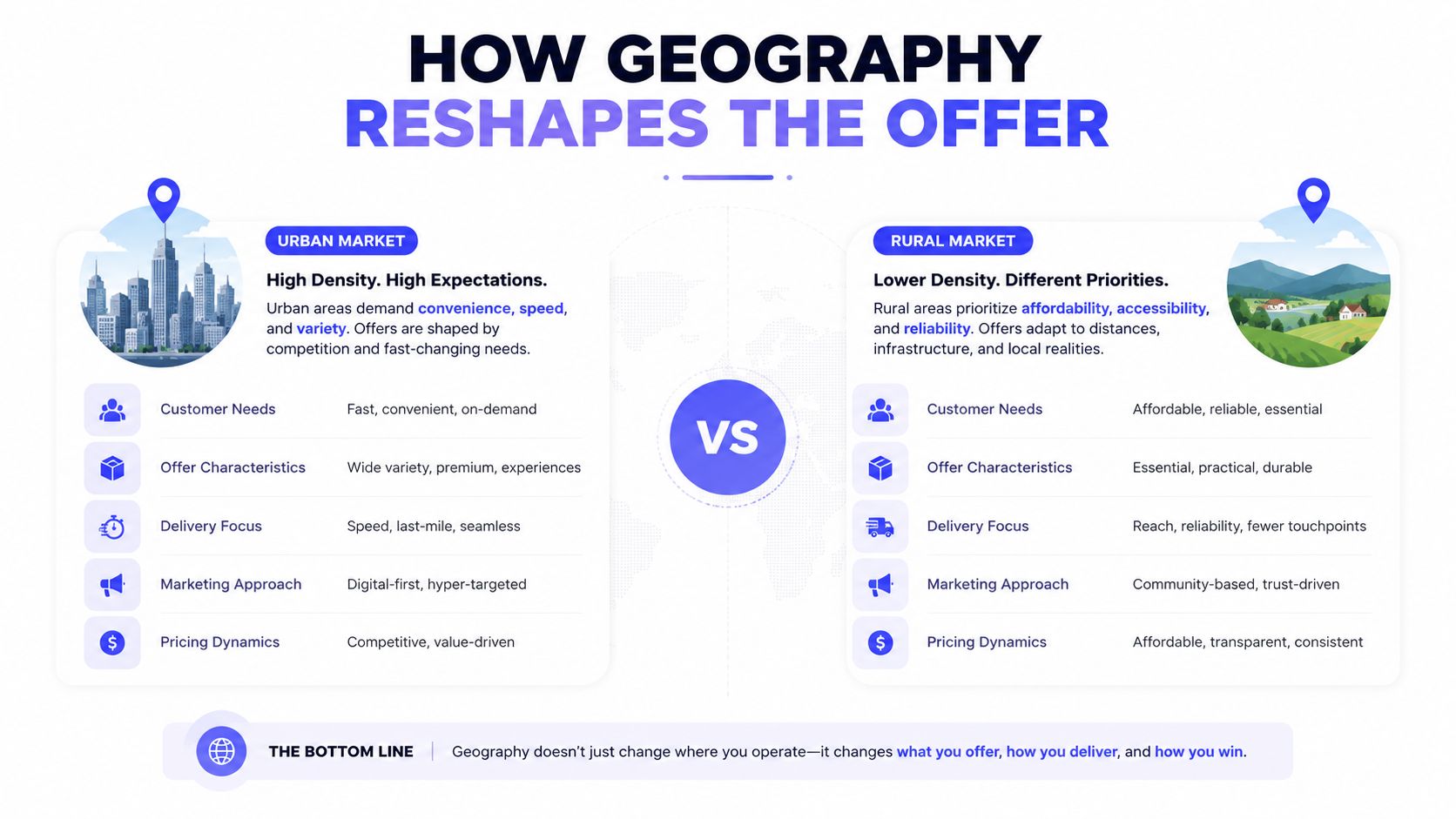
How Geography Reshapes the Offer
The country matters more than the job title
Coursera's 2026 salary guide makes the geographic spread impossible to ignore. It cites a US median salary of $145,080 from the U.S. Bureau of Labor Statistics, plus a US median base salary of $134,023 from Glassdoor-based figures, while also showing much lower typical pay in other markets, including about $110,000 in Canada, $125,000 in Australia, $70,000 in the UK, $60,000 in Germany and France, and $17,000 in India. Coursera AI engineer salary guide
A single US number is not enough to budget a distributed team. Jobspikr's 2026 benchmark puts US AI engineer pay at approximately $160,000 annually, but it explicitly says the figure varies by location, seniority, and the specific nature of the role, which is exactly why one hiring plan can come in cleanly and another can blow up. Jobspikr AI salary benchmark 2026
What to do with that spread
If you hire remotely, geography becomes a budget lever. That doesn't mean you can lowball people and expect elite output. It means you can hire closer to the actual labor market that matches the work, then trade salary against overlap, communication quality, and ownership.
For example, a US-based role with a strong base, bonus, and equity stack often needs a materially higher budget than a comparable remote role in Canada, the UK, or India. In practice, the offer needs to reflect whether you're buying local-market convenience or distributed execution. If the work is mostly asynchronous and the candidate already ships production AI, remote talent can stretch burn meaningfully without forcing you into weaker output.
The smartest budget move is to stop treating “AI engineer” as a single global price tag. Price the role by where the person sits, how much overlap you need, and whether the work is customer-facing, infrastructure-heavy, or highly specialized. If you're comparing staffing models across regions, the right question isn't “what's the cheapest country.” It's “where can I get the right execution quality for the lowest realistic all-in cost?”
Specialization Premiums and Role Design
AI engineer is not one job
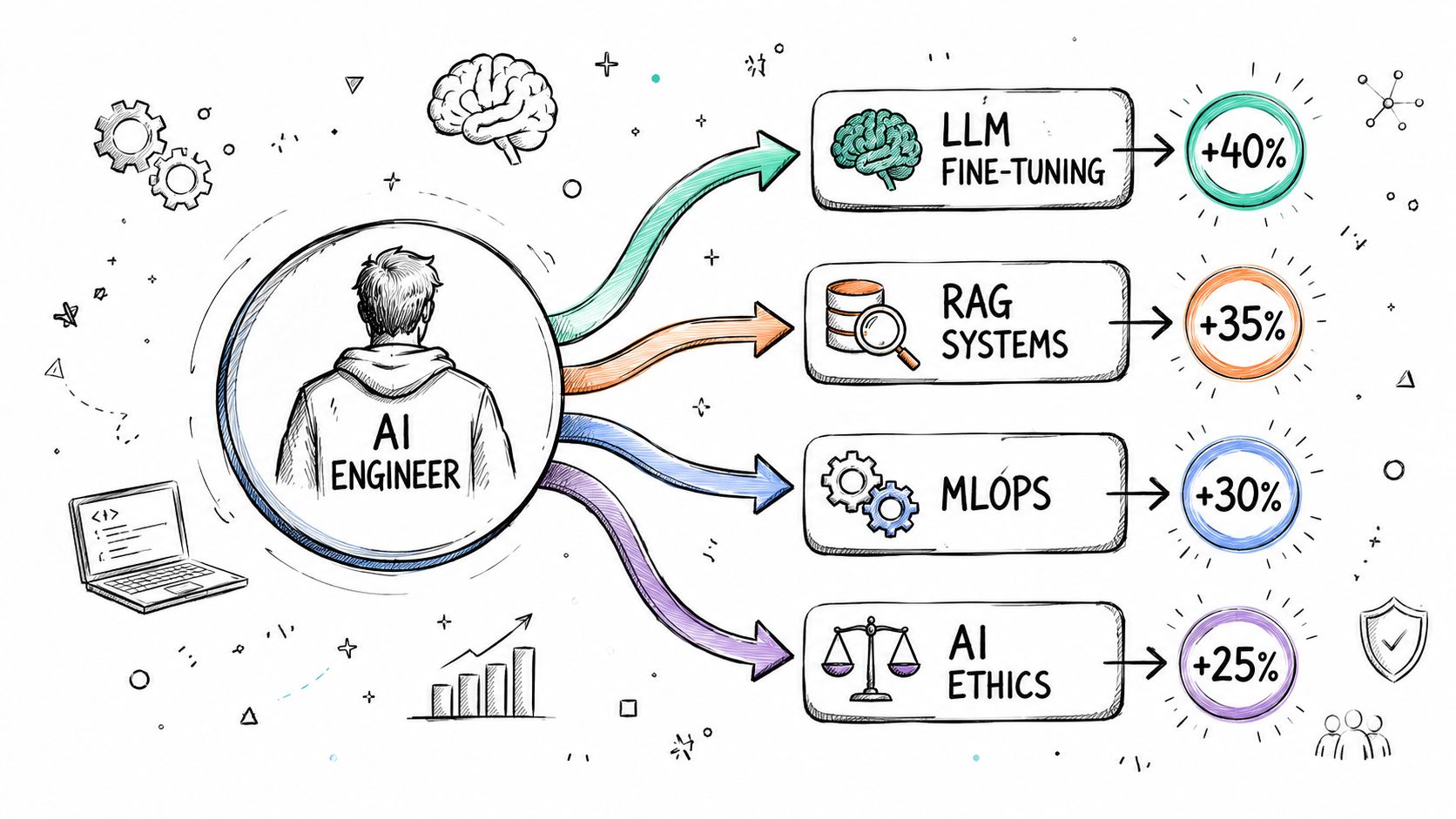
Most salary pages flatten the market into one title. That's lazy. The market pays very differently for LLM fine-tuning, RAG, AI safety, computer vision, and broader production AI work, which means the JD should drive the budget, not the other way around. A 2025–2026 guide reports premiums of +25% to +40% for LLM fine-tuning and RAG, +45% since 2023 for AI safety and alignment, and +30% to +50% for computer vision in certain industries. Acceler8 Talent AI salary market rates
Match the title to the deliverable
A RAG-heavy customer support copilot is a specialist problem. You need someone who understands retrieval quality, evaluation, and failure modes. A generic full-stack engineer with AI enthusiasm usually won't be enough.
A feature-flag AI button inside an existing SaaS product is different. If the problem is light integration, one existing product team can often handle it without paying a deep specialist premium.
Use this filter.
- If the deliverable is a retrieval pipeline, hire for RAG experience.
- If the deliverable is model reliability and deployment, lean toward MLOps.
- If the deliverable is domain-specific visual inference, pay for computer vision depth.
- If the deliverable is safety-sensitive AI behavior, budget for the specialist who has already worked that problem.
For role framing, this top-paying software engineering jobs guide is a useful adjacent read because it shows how title, scope, and market scarcity interact.
Write the JD around the outcome. Let the title follow the work.
That's the cleanest way to avoid overpaying for a vague “AI engineer” label. It also helps candidates understand whether they're being hired to prototype, tune, or operate.
Real Engagements a 90 Day Pilot and a Fractional CTO
A pilot beats a blind full-time hire
A Seed-stage fintech doesn't need a permanent AI org on day one. It needs a senior engineer who can run a 90-day RAG pilot on support tickets, define the evaluation rubric, wire the retrieval stack, and show whether the workflow reduces human handling. The offer should be scoped as a fixed pilot, not a vague “full-time AI engineer” requisition.
In that kind of setup, I'd push for a senior remote specialist, priced by geography and seniority, with one clear output: ship a support workflow that the product and support leads can evaluate. If the pilot works, you convert. If it doesn't, you lose a quarter, not a year.
A Series B SaaS company has a different problem. It often needs a fractional AI CTO for 1 to 2 days a week to define architecture, pick the first production use case, and help recruit the permanent team. That's not a substitute for a strong engineer. It's a way to avoid hiring the wrong permanent team around the wrong architecture. For an example of that model, see ThirstySprout's fractional chief AI officer page.
What each engagement should measure
For the pilot, measure the business result, not vanity metrics. Support lead review, ticket deflection quality, and the number of production blockers surfaced early matter more than demo polish. For fractional leadership, judge speed of decision-making, architecture clarity, and whether the team can start building without rework.
Decision rule: if the team can't define success in one sentence, it's not ready for a full-time AI hire.
A pilot and a fractional engagement both reduce risk. They also make the eventual salary conversation cleaner, because you're negotiating against actual shipped work instead of a résumé.
Why Senior Specialists Beat Generalists at Production AI
Production work punishes vague generality
Production AI rewards people who have already broken systems, fixed them, and learned where they fail. Senior specialists bring that judgment on day one, so you are not paying them to discover the obvious mistakes on your stack. That is why AI specialists command a premium in the market, as shown in Levels.fyi compensation trends, and why the better offer is usually built around total comp, not just base salary.
A team that hires two senior specialists at a high total-comp level can often ship faster than a team that hires five generalists at a lower number. The specialists design the evals, choose the retrieval pattern, and catch the operational traps before they hit customers. Generalists can learn fast, but they usually need more review, more handholding, and more time before they can own production quality without close oversight.
Where generalists still make sense
Generalists still matter when the work is broad, the product is early, or the AI surface area is small. They are also useful when the team needs flexibility more than deep niche knowledge. Use them for exploration, for cross-functional glue, and for work that changes every week.
Do not make them the first two hires if the product depends on reliable model behavior, monitoring, or customer-facing accuracy.
The trade-off is bus factor. One specialist can become a bottleneck if they own too much. I would budget the top two AI hires as senior specialists, then fill the rest with generalists or contractors. That mix gives you speed without turning the roadmap into a single-person dependency.
If you are building production AI, pay for depth first. Breadth is cheaper at hiring time, but it usually costs more later.
For compensation structure and incentive design, Refgrow's compensation plan guide is a solid reference for thinking about structured pay and reward mechanics without mixing fixed comp and variable comp.
Negotiation Playbook and a Hiring Budget You Can Run This Week
Use a total-comp lens, not a base-salary reflex
If you're a candidate, anchor on total compensation, not base. Ask how much of the package is bonus, how much is equity, what the vest schedule looks like, and what level the company is using internally. If the recruiter won't normalize the offer, do it yourself.
If you're the hiring manager, define the level, geography, and comp structure before you talk numbers. Add a premium for scarce AI capability, reserve sign-on flexibility, and budget for the work around the hire, including evaluation, MLOps, and deployment support.
For a useful framing on incentive design, Refgrow's compensation plan guide is a solid reference for thinking about structured pay and reward mechanics without blurring fixed comp and variable comp.
A simple 7-item checklist
- Define the level: junior, mid, senior, staff, or fractional leader.
- Pick the geography: US, Canada, Europe, India, or remote-first with overlap rules.
- Separate base from total comp: salary, bonus, equity, and sign-on.
- Set the AI premium: budget above your non-AI engineering baseline.
- Reserve implementation budget: evals, MLOps, and model monitoring.
- Run a 90-day pilot first: convert after a clear success metric.
- Use a specialist where it matters: RAG, safety, vision, or deployment-heavy work.
If you want a staffing model that fits this market, ThirstySprout works as a remote-first AI talent network that can place vetted engineers, MLOps specialists, and fractional AI leaders in full-time, contract, or fractional formats.
Start with a scoped pilot before you commit to a permanent AI hire, because that's the cheapest way to learn what the role really needs. If you want help sizing the offer, comparing remote options, or getting to a vetted shortlist fast, visit ThirstySprout and ask for a pilot-backed AI hiring plan.
Hire from the Top 1% Talent Network
Ready to accelerate your hiring or scale your company with our top-tier technical talent? Let's chat.