

TL;DR
- Who this is for: CTOs, founders, and hiring managers building remote AI or engineering teams who need a proven playbook.
- Quick Answer: The best remote companies (GitLab, Automattic, Zapier) build their entire operating system around asynchronous work, transparent documentation, and hiring for autonomy—not just allowing remote work.
- Actionable Framework: Use our Remote Team Scorecard to evaluate your own practices against these leaders. Score your documentation, async habits, and hiring process.
- Practical Example 1 (Process): GitLab's public handbook is a real-world example of "documentation as a product." You can copy their async meeting policy to immediately reduce status updates.
- Practical Example 2 (Hiring): Automattic uses paid trial projects instead of hypothetical interviews. This de-risks hires by testing real-world output and collaboration skills.
- What to do next: Start by downloading our Remote Team Scorecard. Then, pilot a pre-vetted AI engineer from our network in under two weeks.
Who This Guide Is For
This guide is for technical leaders who need to act within weeks, not months:
- CTO / Head of Engineering: You're tasked with hiring senior AI/ML engineers and need a reliable process that attracts top talent without geographical limits. You need to de-risk hires and ensure they integrate quickly.
- Founder / Product Lead: You're scoping new AI features and need to build a lean, high-performing team. You need a model that balances speed, cost, and quality.
- Talent Ops / Hiring Manager: You're evaluating candidates and need clear signals to identify engineers who will thrive in a high-autonomy, remote environment.
This is not a generic list of companies. It's a deconstruction of their operating models to give you a blueprint for building your own elite remote team.
Remote-First Framework: The 3 Pillars of Elite Teams
Building a high-performing remote team requires more than a distributed work policy; it demands a specific operational model. Success is not random—it's engineered through three core pillars.
- Asynchronous by Default: Communication does not require an immediate response. This preserves focus time, which is critical for deep technical work like AI development. Status updates become written posts, not mandatory meetings.
- Documentation as a Product: Internal knowledge bases, process documents, and decision logs are treated as critical infrastructure. This isn't bureaucracy; it’s a scaling mechanism that makes onboarding faster and alignment clearer.
- Hiring for Autonomy: The hiring process actively screens for remote competencies like written communication, self-management, and a bias for action. Technical skills are table stakes; the ability to drive projects forward with minimal oversight is the differentiator.
Practical Examples: How Top Companies Implement Remote-First
Here are two concrete examples of these pillars in action.
Example 1: GitLab's Handbook-First Approach to Asynchronous Work
GitLab operates with extreme transparency, publishing its entire 13,000+ page operational strategy in a public handbook.
- What it shows: This is a masterclass in "Documentation as a Product." Instead of knowledge living in people's heads or private Slack channels, it is centralized, version-controlled, and accessible to everyone.
- How you can use it: You don't need a 13,000-page handbook. Start small. For your next project, create one "Single Source of Truth" page for the project brief, technical design, and meeting notes. Make it a rule that if it's not on that page, it's not official. This simple discipline forces clarity and reduces "quick sync" meetings.
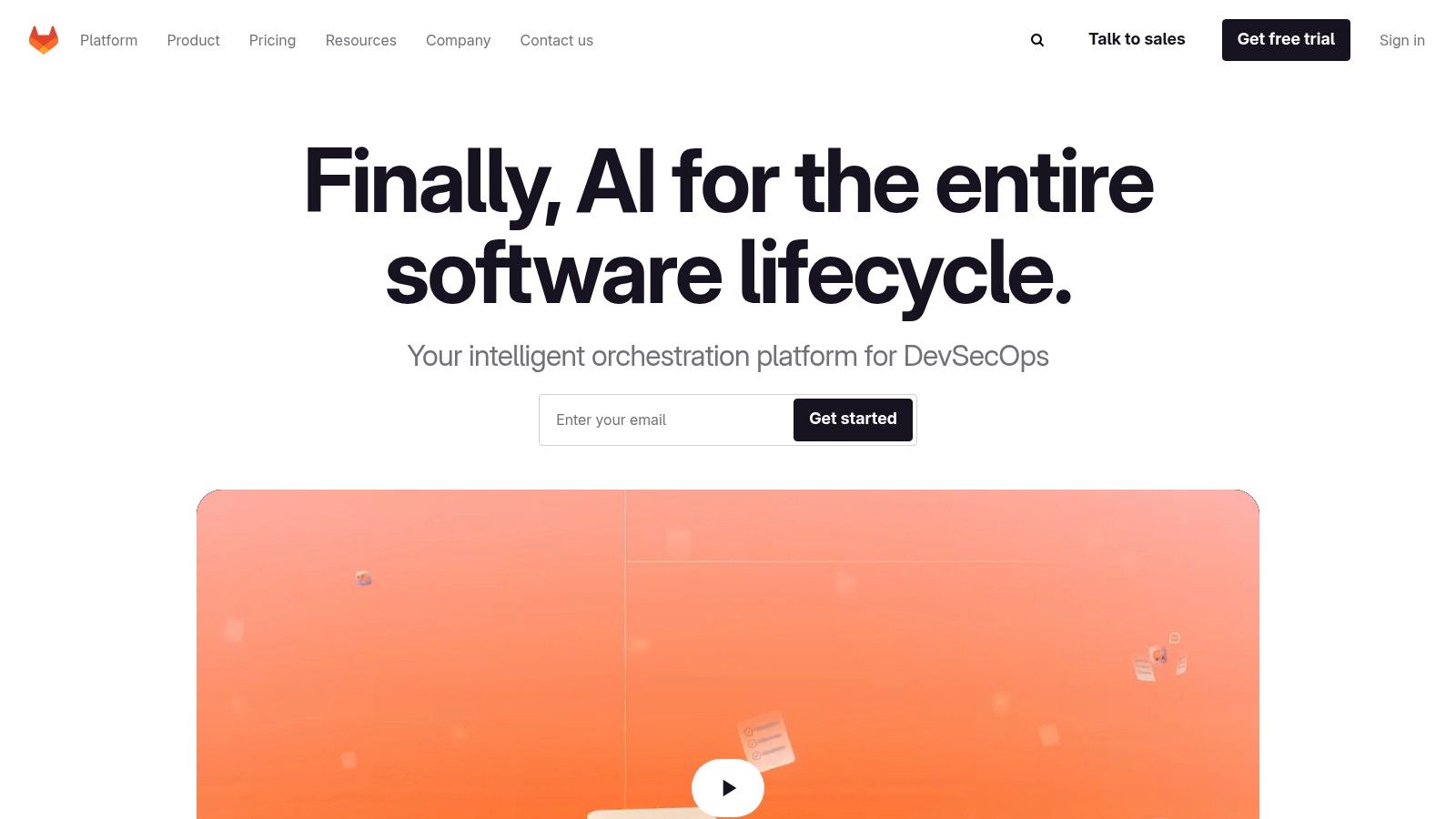
alt text: Screenshot of GitLab's public handbook website, showcasing sections like "All-Remote," "Culture," and "Values." This illustrates their commitment to documentation.
Example 2: Automattic's Paid Trial for Hiring Autonomous Talent
Automattic, the company behind WordPress.com, replaces traditional interviews with a paid trial project that simulates real work.
- What it shows: This is a direct test for autonomy and async communication. A candidate's ability to ask clarifying questions in writing, manage their time, and deliver a finished product is evaluated on real output, not hypothetical scenarios.
- How you can use it: For your next senior engineering hire, design a 4-6 hour paid take-home assessment. The task should be a small, self-contained problem similar to what they'd actually work on. Provide the brief in writing and evaluate them on the quality of their code, the clarity of their documentation (e.g., a README), and how they communicate questions asynchronously.
Deep Dive: 7 Top Remote Companies & Their Playbooks
We deconstruct the operating playbooks of seven elite remote-first organizations. You will get actionable insights into their specific remote policies, compensation philosophies, and hiring signals.
1. GitLab
GitLab is not just a DevSecOps platform; it's a foundational example of how to build and scale one of the world's top remote companies. Their "handbook-first" approach provides a masterclass in asynchronous work, prioritizing written communication and documentation over meetings. This rigor forces clarity and accountability—traits that directly benefit complex AI and MLOps pipelines.
- Remote Policy: 100% remote by design. Hires in over 65 countries.
- Hiring Process: Transparent and values-driven, with assessments for async communication skills. Compensation is location-based, calculated via a public formula.
- Trade-offs: The process-heavy culture can feel restrictive for those who prefer informal collaboration. However, this structure is what enables them to scale globally. The deep integration of their own tool into their workflow shows how a product can reinforce a company's culture.
For a deeper look at their toolset, see this GitLab vs GitHub 2026 comparison. To adopt these practices, explore our guide on building effective remote-first companies.
2. Automattic
Automattic, the company behind WordPress.com, is a pioneer, fully distributed since 2005. Their "Distributed Creed" prioritizes asynchronous communication through internal blogs (P2s) over real-time meetings. This async-first approach is particularly relevant for AI development, where focused, deep work is essential.
alt text: A collage of photos showing Automattic team members working from various locations around the world, emphasizing their distributed culture.
- Remote Policy: 100% distributed across nearly 100 countries. Collaboration is primarily asynchronous.
- Hiring Process: Begins with a text-based chat interview, followed by a paid trial project that simulates real work. This directly tests a candidate’s async communication skills and autonomy.
- Trade-offs: The trial-based process is time-intensive for candidates, but it significantly de-risks hiring by evaluating actual output. The emphasis on written communication may not suit everyone.
3. Zapier
Zapier stands as a pillar among top remote companies, operating remote-first since 2011. Its core business—automating workflows—is a direct reflection of its internal culture. This "automate everything" mindset fosters pragmatic problem-solving and reduces operational drag.
alt text: Screenshot of the Zapier interface showing an automated workflow (a "Zap"), symbolizing their culture of automation.
- Remote Policy: 100% remote-first, with explicit guidance for successful async communication.
- Hiring Process: Structured to identify candidates who thrive in a remote setting. It emphasizes strong written communication skills, autonomy, and a proactive mindset, often using practical assessments.
- Trade-offs: Not all roles offer true work-from-anywhere flexibility, as some have regional constraints for team alignment. However, their mature remote culture provides a clear model for operational efficiency.
For more practical advice on building a successful distributed workforce, see our detailed guide to manage a remote team.
4. Dropbox
Dropbox evolved with its "Virtual First" model, making remote work the primary experience. Physical offices were reimagined as "Studios" for intentional, in-person collaboration, like team offsites and project kickoffs.
alt text: Photo of a modern, collaborative office space labeled "Dropbox Studio," designed for team gatherings rather than daily work.
- Remote Policy: Virtual First is the default. Employees work from home and travel for coordinated in-person events a few times per year.
- Hiring Process: Emphasizes skills like written communication and self-management. Compensation is tied to geographical zones, not individual cities.
- Trade-offs: This is a practical compromise, but the travel requirement means it is not fully location-independent. It offers a balanced model for teams needing both deep focus and high-bandwidth creative bursts.
Explore their tools at dropbox.com or use our guide on structuring remote engineering teams for your own policy.
5. Coinbase
Coinbase pivoted to a remote-first model to attract specialized talent globally. This approach offers parity and flexibility, while maintaining optional physical hubs for teams that benefit from occasional in-person collaboration.
alt text: Screenshot of the Coinbase website with a graphic illustrating their remote-first work model and global team presence.
- Remote Policy: Officially remote-first, with optional offices in key locations.
- Hiring Process: Rigorous process focused on technical skills, domain expertise (e.g., blockchain, security), and mission alignment.
- Trade-offs: The cyclical nature of the crypto market can lead to hiring volatility. However, their executive commitment provides a stable "best-of-both-worlds" model for employees.
Learn more at Coinbase and find strategies for your team in our guide to sourcing top remote AI engineers.
6. 37signals (Basecamp/HEY)
37signals, the creators of Basecamp and HEY, are pioneers of remote work philosophy. Their principles champion deep work, autonomy, and work-life balance, fostering a culture where a small, senior team can do their best work without bureaucracy.
alt text: Screenshot of the 37signals website navigation menu, featuring their products Basecamp and HEY, representing their focus on simple, effective tools.
- Remote Policy: 100% remote with no headquarters. Openings are infrequent.
- Hiring Process: Highly selective, focusing on proven expertise and exceptional writing skills, as clear async communication is foundational.
- Trade-offs: Their infrequent hiring and small-team preference is not a model for rapid scaling. They provide a powerful blueprint for building a durable, profitable, and calm company.
Learn more at the 37signals website and find similar talent with our guide on sourcing senior AI engineers.
7. Doist (Todoist, Twist)
Doist's remote-first culture is a direct reflection of its products, Todoist and Twist. They champion a "calm productivity" ethos that prioritizes deep work and async communication over constant meetings, making it a top choice for teams that value focus.

alt text: An illustration from Doist's blog showing people working calmly in various non-office settings, reflecting their async-first and lifestyle-friendly culture.
- Remote Policy: 100% remote, async-by-design, with no required "online" hours.
- Hiring Process: Values strong writing skills and self-motivation, often using a small, paid test project.
- Trade-offs: As a smaller, bootstrapped company, job openings are limited. The strong emphasis on writing and autonomy may be challenging for those used to meeting-heavy environments.
Explore their philosophy on the Doist blog.
Remote Team Scorecard (Template)
Don't just read—act. Use this scorecard to rate your own team's remote maturity on a scale of 1 (ad-hoc) to 5 (optimized). Where are your biggest gaps?
Scoring Guide:
- <15: Your team is likely experiencing friction from "remote-in-name-only" practices. Focus on one pillar, like documentation, to get a quick win.
- 15-20: You have a good foundation. Identify your lowest score and pilot one new process from the playbooks above.
- 21+: You are operating at a high level. Your next step is to codify and scale these practices.
You can copy this table into a spreadsheet or Notion page to share with your team.
What to Do Next: Your 3-Step Action Plan
You’ve seen the blueprints. Success in remote work isn’t an accident; it’s a product of deliberate operational choices. Here are three concrete steps you can take this week:
- Conduct a Communication Audit: For one week, track every meeting. At the end of the week, ask for each one: "Could this have been a written update?" This will reveal low-hanging fruit for creating more focus time.
- Start a "Single Source of Truth" Document: Create one central page for a critical process, like your AI model deployment checklist. Make it the go-to resource and relentlessly direct people there.
- Refine One Interview Stage: Add a specific question to your technical screen that assesses remote work capabilities. For example: "Describe a time you resolved a technical conflict with a colleague in a different time zone. What was the outcome?"
Building a world-class team also means staying informed about the tools and talent ecosystems around you. As you consider different partners and resources, you might find it useful to check the saply.ai homepage to see what other companies in the AI space are doing. The key is to adapt these principles to fit your specific context, starting with small, tangible changes.
Ready to accelerate your hiring with talent already vetted for these remote-first skills? ThirstySprout connects you with senior AI and ML engineers from our exclusive network who are proven remote collaborators.
- Start a Pilot: Test a pre-vetted engineer on a real project.
- See Sample Profiles: Review candidates matched to your spec.
- Book a 20-min call: Let's scope your needs. You can have a pilot running in under two weeks.
Hire from the Top 1% Talent Network
Ready to accelerate your hiring or scale your company with our top-tier technical talent? Let's chat.