

TL;DR
- For Direct Placement: Use a specialized talent network like ThirstySprout to bypass public job boards and connect with pre-vetted, high-growth companies hiring senior AI talent. Start interviewing in 48–72 hours.
- For Startup Roles: Focus on Wellfound for its direct access to founders and transparent salary/equity data in the venture-backed ecosystem.
- For Niche AI Roles: Use curated boards like AI Jobs (aijobs.com) and MachineLearningJobs.com to find high-signal roles without the noise of generalist platforms.
- For Broad Coverage: Leverage LinkedIn and Indeed for their massive volume, but apply a disciplined filtering and networking strategy to stand out.
Who this is for
- CTOs and Hiring Managers: You need to source and hire qualified remote ML engineers, MLOps specialists, or data scientists efficiently.
- Founders and Product Leads: You are scoping AI/ML roles and need to understand the talent landscape and where to find candidates who can ship production systems.
- ML Engineers & Data Scientists: You are looking for your next full-time or contract remote role and need a practical guide to the best job platforms.
Quick Answer: A Tiered Job Search Framework
A successful remote ML job search isn't about volume; it's about focus. We recommend a tiered approach to manage your time and maximize impact.
- Platforms: ThirstySprout, Wellfound, AI Jobs.
- Action: Create detailed profiles, engage directly, and submit highly tailored applications.
- Platforms: LinkedIn, Dice, We Work Remotely.
- Action: Set up precise alerts, use networking for referrals, and focus on recently posted jobs.
- Platforms: Indeed, ZipRecruiter, Glassdoor.
- Action: Use advanced search queries and always verify listings on the company's official site before applying.
Practical Example 1: Crafting a Project README for Business Impact
Most ML portfolios show code, not results. To stand out, reframe your project READMEs to highlight business impact. This is what hiring managers look for.
Before (Typical Academic README):
- Project: Customer Churn Prediction
- Model: Logistic Regression, Random Forest, XGBoost
- Dataset: Kaggle Telco Customer Churn
- Metrics: Accuracy: 81%, Precision: 65%, Recall: 58%, F1-Score: 61%
After (Actionable, Business-Focused README):
- Project Goal: Reduce monthly customer churn by identifying at-risk accounts for proactive intervention.
- Business Impact: The model correctly identifies 58% of churning customers (Recall), allowing the retention team to focus efforts on a smaller, high-risk segment. A 10% reduction in churn for this segment could save an estimated $50k in monthly recurring revenue (MRR).
- Data pipeline built with Pandas and Scikit-learn, pulling from a simulated customer database (CSV).
- Deployed an XGBoost model (AUC-ROC: 0.84) via a Flask API endpoint hosted on AWS Elastic Beanstalk.
- Trade-off: Chose XGBoost over a simpler Logistic Regression model for a 7% lift in recall, accepting a 50ms increase in inference latency, which was acceptable for batch scoring.
Practical Example 2: Sample Interview Question for MLOps
Hiring managers need to know you can think about production systems, not just models. Be prepared for system design questions that test your practical MLOps knowledge.
Question:
"You are tasked with deploying a sentiment analysis model that must process 1,000 tweets per second with a p99 latency of 200ms. The model is a fine-tuned DistilBERT, which is moderately large. How would you design the serving infrastructure on AWS?"
A Strong Answer Covers:
- Serving Strategy: "I'd start by packaging the model into a Docker container. For serving, I'd use a high-performance inference server like NVIDIA Triton Inference Server or TorchServe, as they handle batching and dynamic resource allocation better than a simple Flask API."
- Infrastructure: "To handle the throughput, I'd deploy this container on Amazon EKS (Elastic Kubernetes Service) using GPU-enabled nodes (e.g., g4dn instances). I would set up a Horizontal Pod Autoscaler (HPA) to scale the number of model replicas based on CPU/GPU utilization or a custom metric like requests per second."
- Performance & Cost: "To meet the latency requirement, I'd use dynamic batching to group incoming requests, maximizing GPU throughput. If latency is still an issue, I'd explore model optimization techniques like quantization (e.g., INT8) or distillation to create a smaller, faster model. This also has the benefit of reducing hosting costs."
- Monitoring: "I'd use Prometheus to scrape metrics from the inference server (latency, throughput, GPU utilization) and Grafana for visualization. I would also set up alerts in Alertmanager for latency spikes or high error rates."
1. ThirstySprout
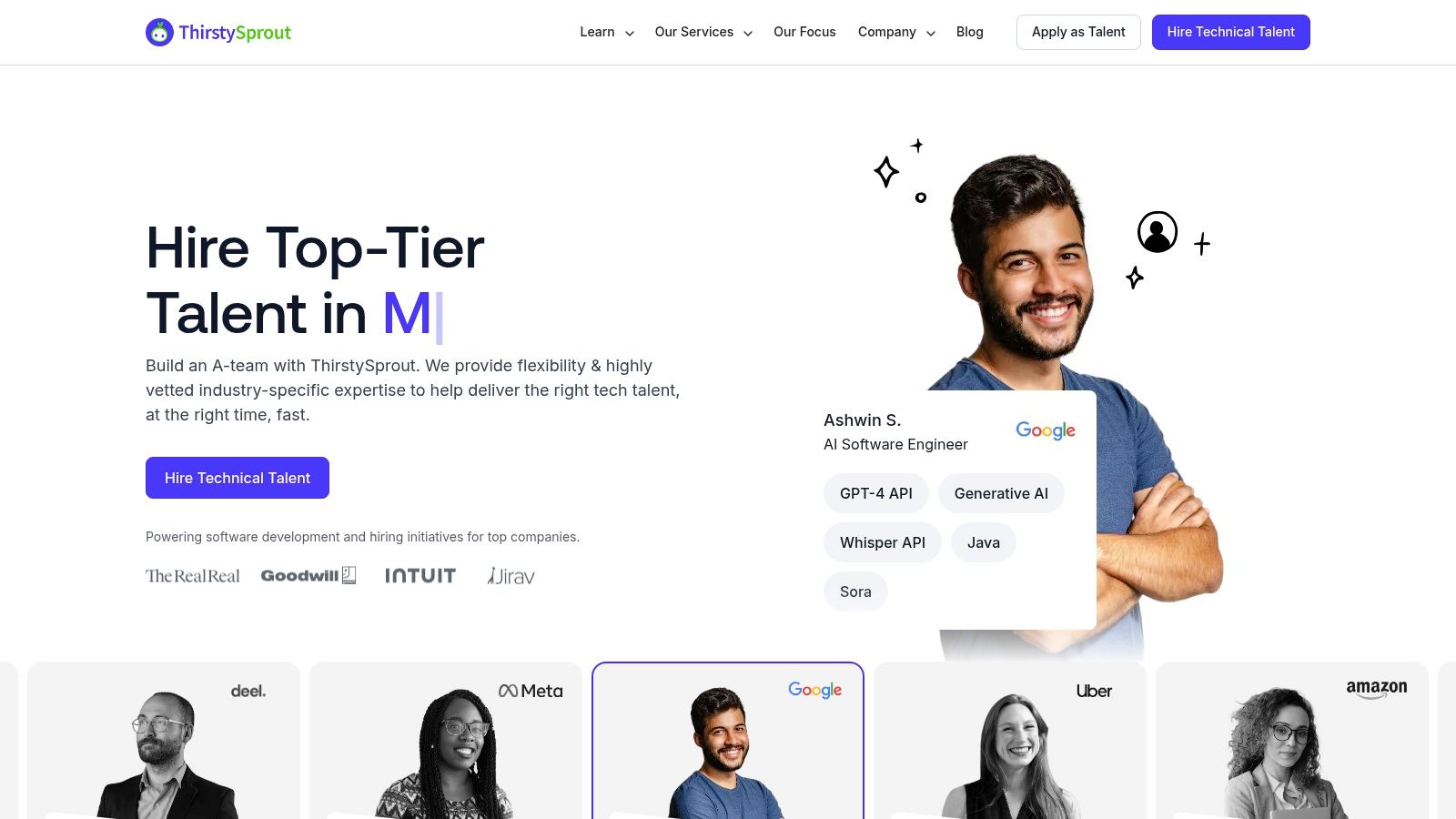
ThirstySprout operates as a specialized, AI-powered talent network for companies that need to hire elite, pre-vetted AI and ML professionals quickly. Its core value is speed and quality, bypassing the slow cycles of traditional recruiting. The platform connects businesses with the top 1% of talent for roles like ML engineers, MLOps specialists, and data engineers.
For technical leaders, this means interviewing qualified candidates within 48 to 72 hours. The platform combines a proprietary machine learning engine that scans millions of profiles with rigorous human-led vetting. This ensures candidates not only have the right technical skills but have also shipped production-grade systems—a critical differentiator.
Alt text: A graphic illustrating ThirstySprout's AI talent network and hiring process.
Why It Stands Out
ThirstySprout focuses exclusively on the AI/ML domain and offers flexible engagement models. Whether you need a full-time hire, a contract expert for a specific project, or a fully managed remote team, the platform can accommodate. This flexibility is invaluable for startups scaling their AI capabilities or enterprises on a tight deadline.
The service is backed by clients like Mailchimp, Intuit, and Deel. Their process is designed for business impact, promising not just a fast hire but a successful long-term match. The platform also handles the complexities of global hiring, offering employer-of-record (EoR) services.
Key Features & Use Cases
- AI-Powered Sourcing & Vetting: Rapidly identifies candidates based on technical stack, production experience, and time zone. Ideal for roles requiring expertise in LLMs, computer vision, or MLOps.
- Rapid Time-to-Hire: The pre-vetted talent pool enables companies to start interviewing in days. A startup that needs to build an ML team for its Minimum Viable Product (MVP) can use this to meet a tight schedule.
- Flexible Engagement Models: Hire full-time, contract, or managed teams. A company can bring in a fractional Head of AI to define strategy before committing to a full-time hire.
- Global Talent Access with EoR: Simplifies hiring top talent from anywhere by managing international payroll, compliance, and benefits.
Pricing and Access
ThirstySprout does not publish standard pricing. Costs are customized based on the engagement type, role seniority, and international hiring needs. Contact their sales team for a consultation.
- Speed: Start interviewing senior, vetted candidates in 48-72 hours.
- Specialization: Deep focus on production-proven AI and ML talent.
- Flexibility: Supports various hiring models from contract to full-time.
- Quality: Strong client portfolio highlights high-quality candidate delivery.
- No Public Pricing: Requires a direct sales inquiry to understand costs.
- Remote-First Focus: May not be suitable for companies requiring on-site collaboration.
2. LinkedIn Jobs
As the world's largest professional network, LinkedIn is a non-negotiable platform for sourcing machine learning remote jobs. Its primary strength is its network effects. You can often see who posted a job, identify mutual connections for a warm referral, or directly message recruiters. This transforms the job search from a passive application into active networking.
The platform's job search functionality allows you to set up specific, saved searches with alerts for remote roles in machine learning or MLOps. However, the "Easy Apply" feature can be a double-edged sword; its convenience leads to high application volume, making it harder to stand out.
Practical Tips for LinkedIn
- Optimize Your Profile: Use keywords like "Machine Learning Engineer," "MLOps," and specific skills (e.g., "PyTorch," "TensorFlow," "Kubernetes") in your headline and "About" section to attract recruiter searches.
- Strategic Outreach: When you find a compelling role, identify the likely hiring manager. A concise, professional message referencing their work or the specific role can significantly increase your visibility.
- Filter Smartly: Use the "Remote" filter combined with location filters (e.g., "United States") to narrow down opportunities.
Website: https://www.linkedin.com/jobs
3. Indeed
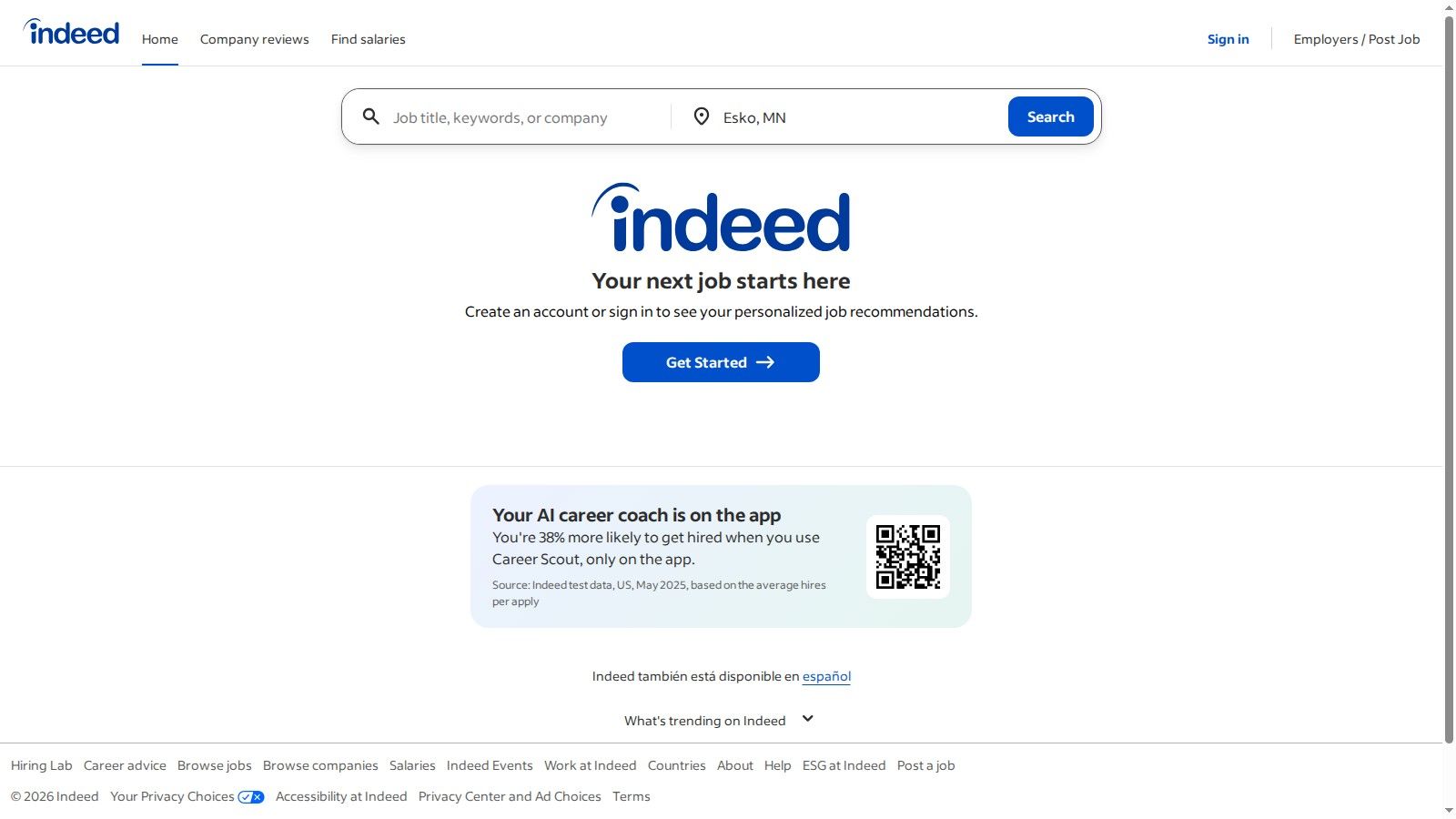
Indeed offers a vast and diverse pool of machine learning remote jobs. Its primary strength is volume, pulling listings from company career pages and other job boards. This makes it an essential tool for comprehensive market coverage, especially for roles at large enterprise companies.
Alt text: Indeed job search interface showing a search for "machine learning remote jobs" with filters on the sidebar.
While the breadth is an advantage, the signal-to-noise ratio can be high. You might encounter duplicate or outdated posts. However, the inclusion of salary estimates and extensive company reviews provides valuable context for evaluating opportunities.
Practical Tips for Indeed
- Master the Advanced Search: Use Boolean operators in your query (e.g.,
"Machine Learning Engineer" AND (PyTorch OR TensorFlow) NOT "Senior Staff") to get specific results. - Leverage Company Reviews: Before applying, check the "Company Reviews" section. Look for feedback from engineering team members to gauge work culture and remote policies.
- Filter by Salary: Use the salary filter to quickly discard roles that don't meet your financial requirements.
Website: https://www.indeed.com
4. Glassdoor
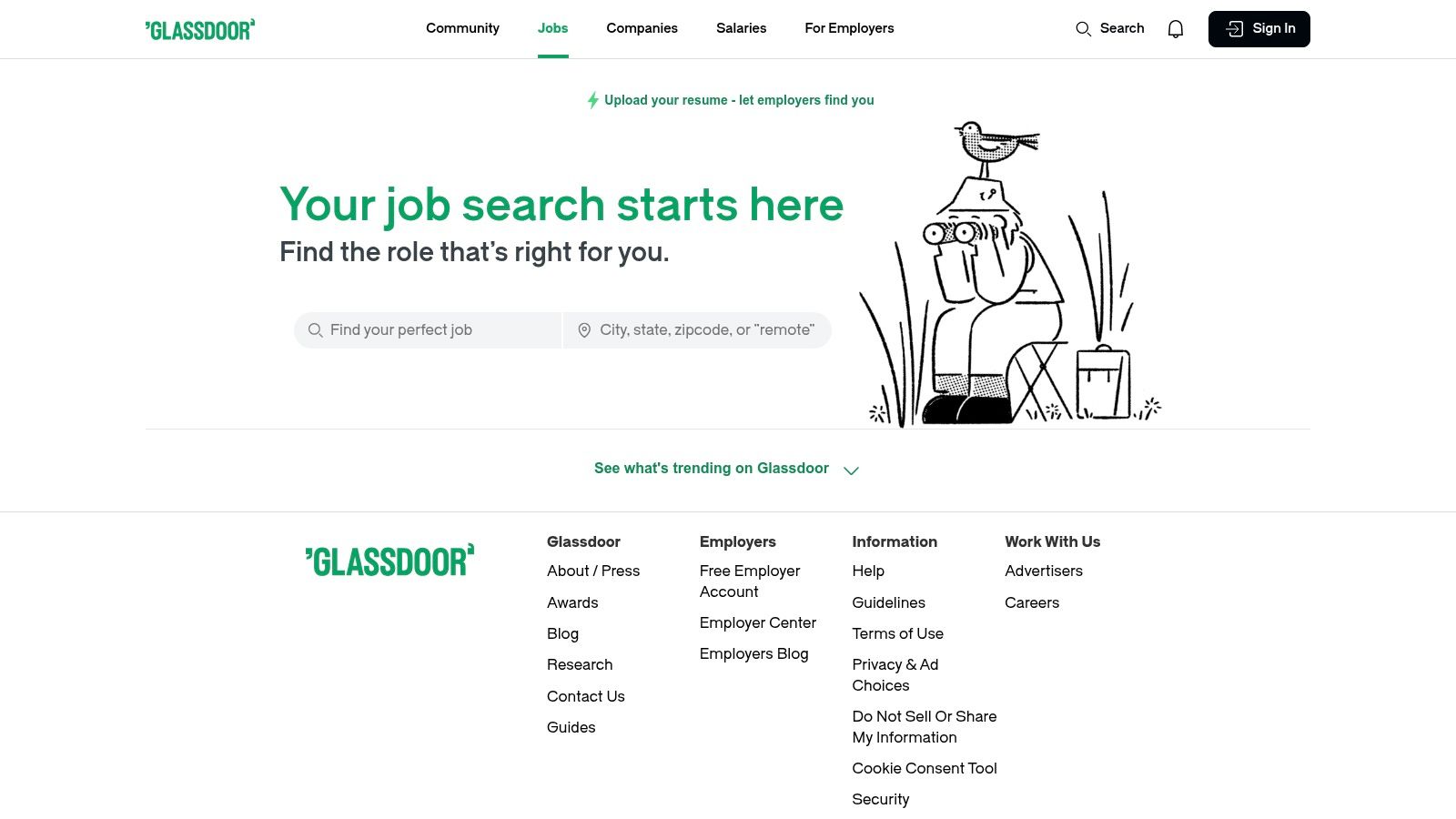
Glassdoor’s primary value is as a research tool for evaluating machine learning remote jobs. Its database of company reviews, salary data, and interview questions provides unparalleled transparency. Before you apply, you can benchmark compensation and get a candid look at a company's culture.
Alt text: Glassdoor user interface with a search for machine learning remote jobs and filtering options.
This context is vital for remote roles. By filtering reviews for the "Engineering" department, you can uncover specifics about remote-first processes and MLOps maturity. The real power comes from combining this data to target high-quality employers.
Practical Tips for Glassdoor
- Benchmark Salaries First: Use the salary explorer to understand compensation bands for your target role (e.g., "Senior Machine Learning Engineer," "Remote").
- Analyze Interview Questions: Search for your target company to find interview questions shared by previous candidates, giving you insight into their technical screening process.
- Triangulate Reviews: Look for trends across multiple recent reviews from engineering departments. Pay attention to comments on management and project quality.
Website: https://www.glassdoor.com/Job
5. Wellfound (formerly AngelList Talent)
For those targeting high-growth startups, Wellfound is an indispensable resource for finding machine learning remote jobs. The platform is a dedicated marketplace connecting technical talent with venture-backed companies. Its key differentiator is the high-signal environment; you often engage directly with founders and CTOs.
The platform excels at transparency. Most listings clearly state salary ranges and equity. Furthermore, its remote filtering is specific, allowing you to see where a company hires from (e.g., "US Only," "Global"). This eliminates ambiguity.
Practical Tips for Wellfound
- Create a Detailed Profile: Your Wellfound profile is your pitch. A strong one can lead to inbound interest from founders.
- Leverage Direct Messaging: A concise note expressing genuine interest in their product and how your ML skills can help is far more effective than a generic application.
- Use the Location Filters: Pay close attention to the "Hires remotely from" section on each job posting to save time.
Website: https://wellfound.com/jobs
6. Dice
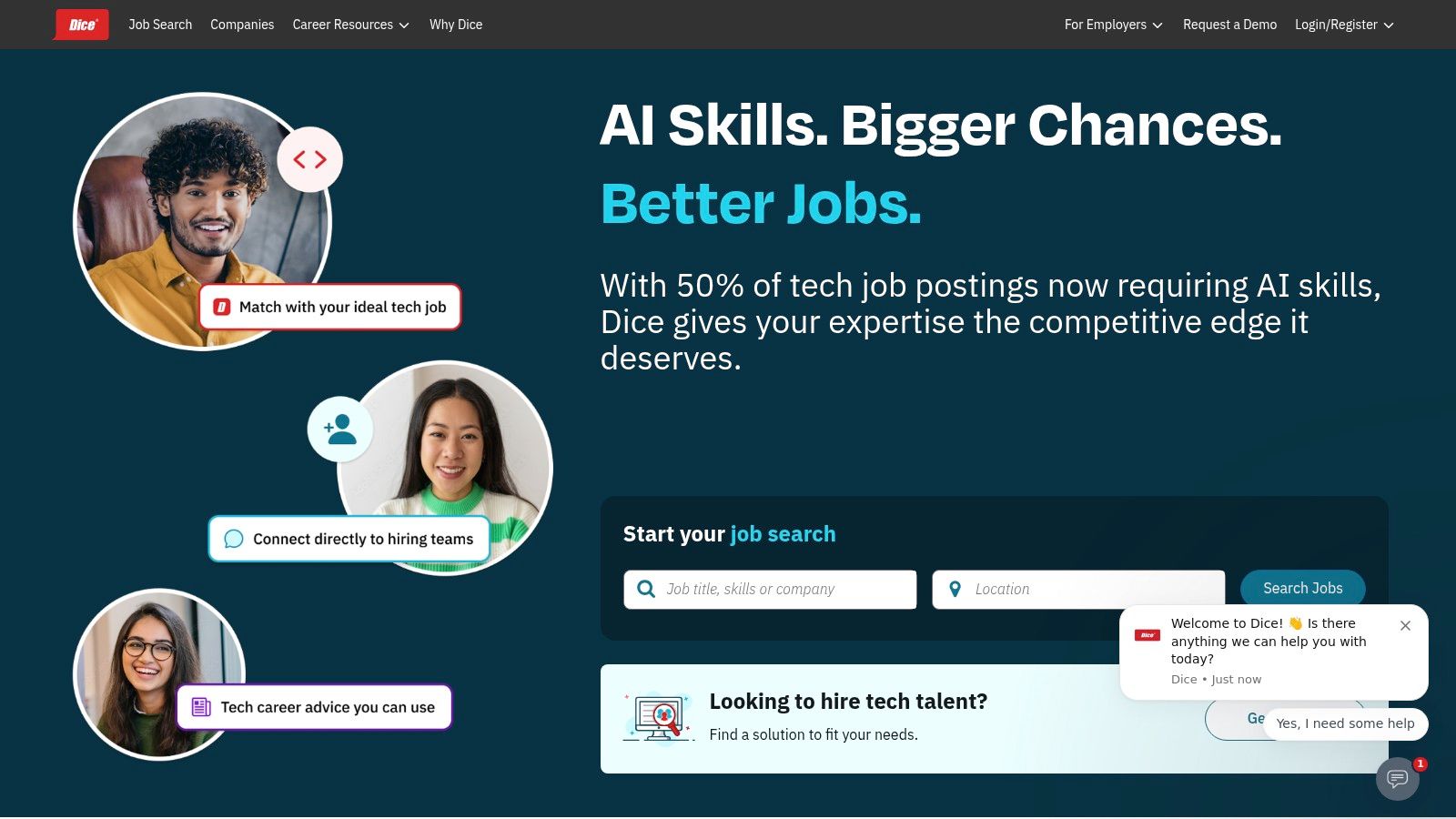
Dice is a tech-centric job board for sourcing machine learning remote jobs, especially for enterprise systems and government contracts. It cuts through the noise of generalist sites by catering exclusively to technology professionals. This makes it a high-signal environment for finding MLOps and senior ML roles.
The platform excels at serving the US market for full-time and contract positions. Its filtering capabilities are powerful, allowing you to narrow searches by recency, employment type, and remote status.
Alt text: A person searching for machine learning remote jobs on a laptop, representing a platform like Dice.
Practical Tips for Dice
- Filter by Date: Aggressively use the "Posted Within" filter (e.g., "Last 7 Days") to bypass outdated jobs and focus on active hiring processes.
- Leverage Keywords for Infrastructure: For MLOps roles, combine ML keywords with terms like "DoD," "CI/CD," or "contract" to uncover niche opportunities.
- Vet Recruiter Postings: Many listings are from third-party recruiters. If possible, identify the end client to tailor your application with more context.
Website: https://www.dice.com
7. ZipRecruiter
ZipRecruiter operates as a massive US-centric job marketplace, acting as a powerful aggregator for machine learning remote jobs. Its primary advantage is its wide syndication network, making it useful for discovering opportunities at less-visible companies.
The user experience is designed for speed. The "1-Tap Apply" feature streamlines applications, and its email alert system delivers daily digests of new remote ML roles. While it excels at breadth, the signal-to-noise ratio can be a challenge, requiring you to verify roles on the company's official careers site.
Practical Tips for ZipRecruiter
- Refine Your Alerts: Be specific with your alert keywords (e.g., "remote machine learning engineer pytorch") and fine-tune the email frequency.
- Use Pay Transparency: Many listings include salary ranges. Use this data to filter out roles that don't meet your financial requirements.
- Always Verify: Before applying, click through to the original job posting on the employer's applicant tracking system (ATS) to ensure the role is still open.
Website: https://www.ziprecruiter.com
8. We Work Remotely
We Work Remotely is a highly curated job board dedicated exclusively to remote roles. For those seeking machine learning remote jobs, its "Programming" category often features ML Engineer and Data Scientist positions. The platform's core strength is its strict remote-only policy, which filters out hybrid roles.
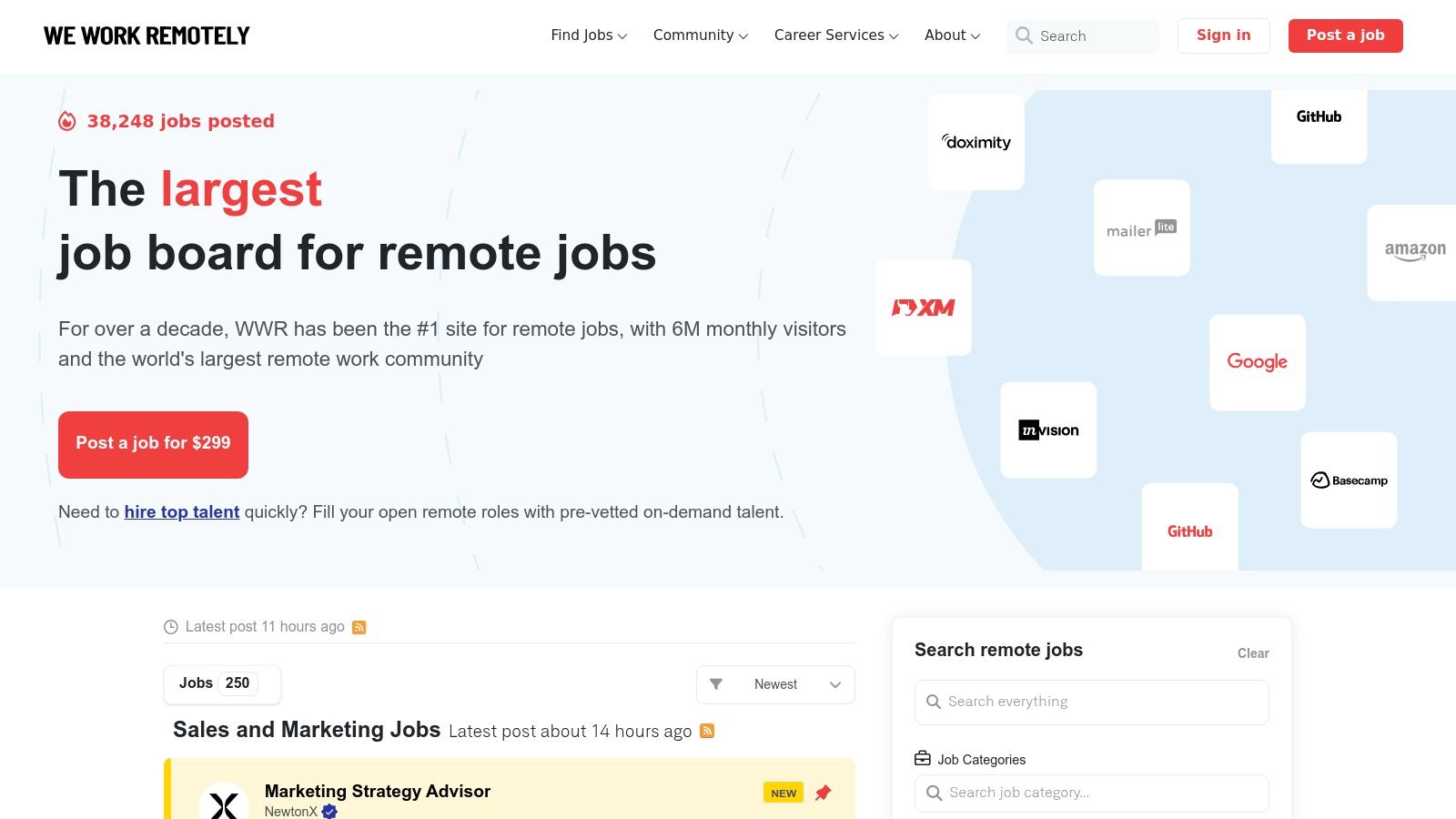
Alt text: The logo and interface of the We Work Remotely job board.
The user experience is clean and straightforward. Employers pay a premium to post, which results in higher-quality opportunities from remote-first companies. However, you must carefully read job descriptions for potential geographic restrictions.
Practical Tips for We Work Remotely
- Bookmark Key Categories: Regularly check the "Programming" category and use your browser's find function for keywords like "machine learning" or "AI."
- Check Posting Dates: The feed is chronological. Prioritize applying to jobs posted within the last week.
- Scrutinize Location Tags: Pay close attention to tags like "Anywhere," "USA Only," or "Europe" to determine if a role fits your location.
Website: https://weworkremotely.com
9. Remote OK
Remote OK is a focused job board dedicated to remote work, making it a valuable resource for finding machine learning remote jobs. Its strength is its simple, tag-based discovery system. Searching for tags like "ml," "llm," or "python" quickly surfaces relevant positions.
The user experience is streamlined, with jobs presented in a clean list format. Candidates can apply directly via an external link. While simple, the quality and completeness of job descriptions can vary.
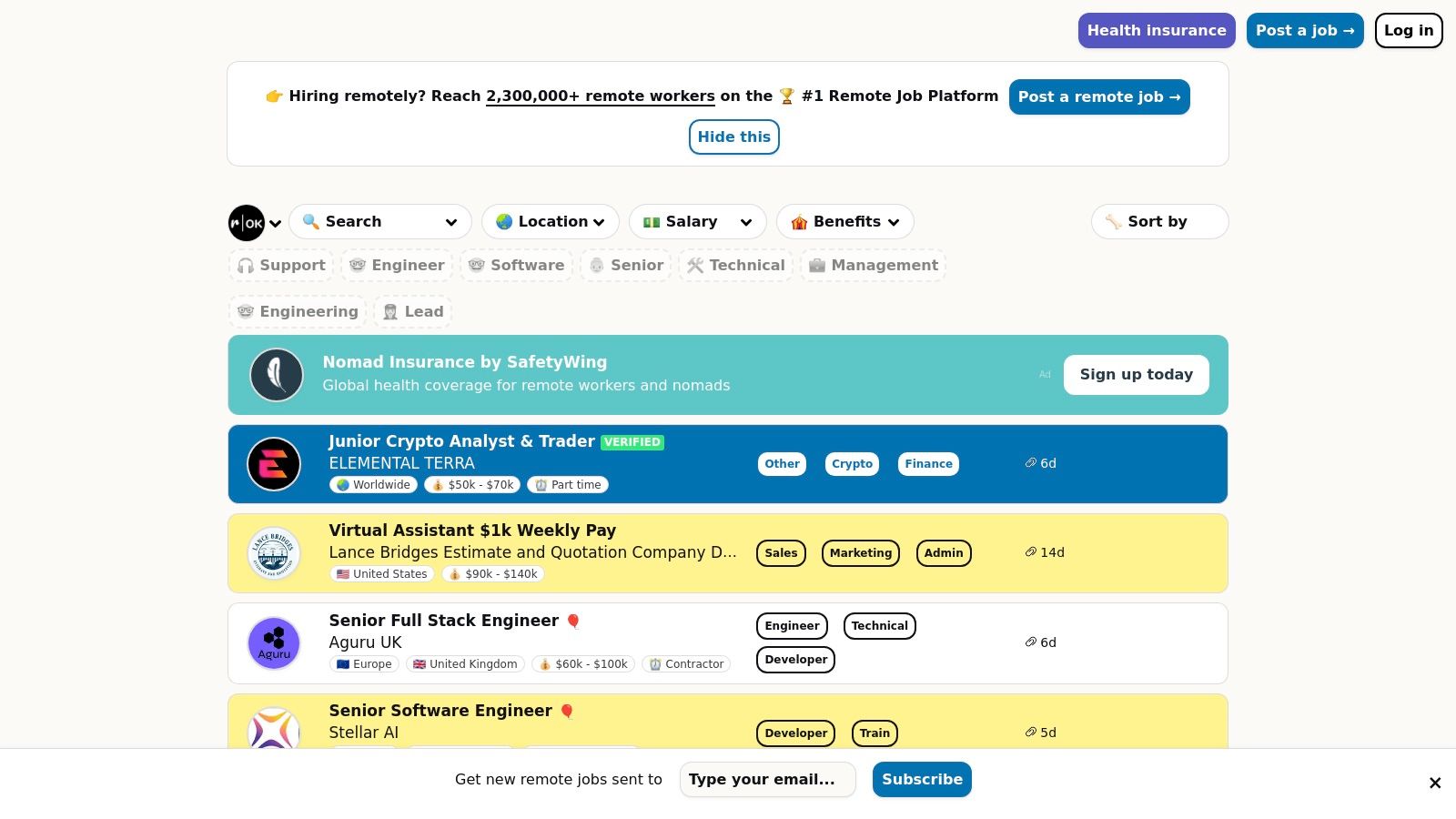
Alt text: The logo and job listing interface of the Remote OK website.
Practical Tips for Remote OK
- Use Tag Combinations: Combine skill tags (e.g., "pytorch") with role tags ("machine learning") to refine your search and set up email alerts.
- Evaluate Listings Critically: Pay attention to the posting date, as some listings may be expired. Vet the hiring company carefully.
- Look for Contract Gigs: Remote OK is an excellent source for contract and freelance ML projects, which is a key consideration when hiring remote developers.
Website: https://remoteok.com
10. AI Jobs (aijobs.com)
AI Jobs provides a focused feed for AI, ML, and data professionals. Its advantage is its niche taxonomy, allowing you to filter directly for roles like "Computer Vision Engineer" without wading through generic software listings. This makes it efficient for discovering machine learning remote jobs at startups and specialized AI labs.
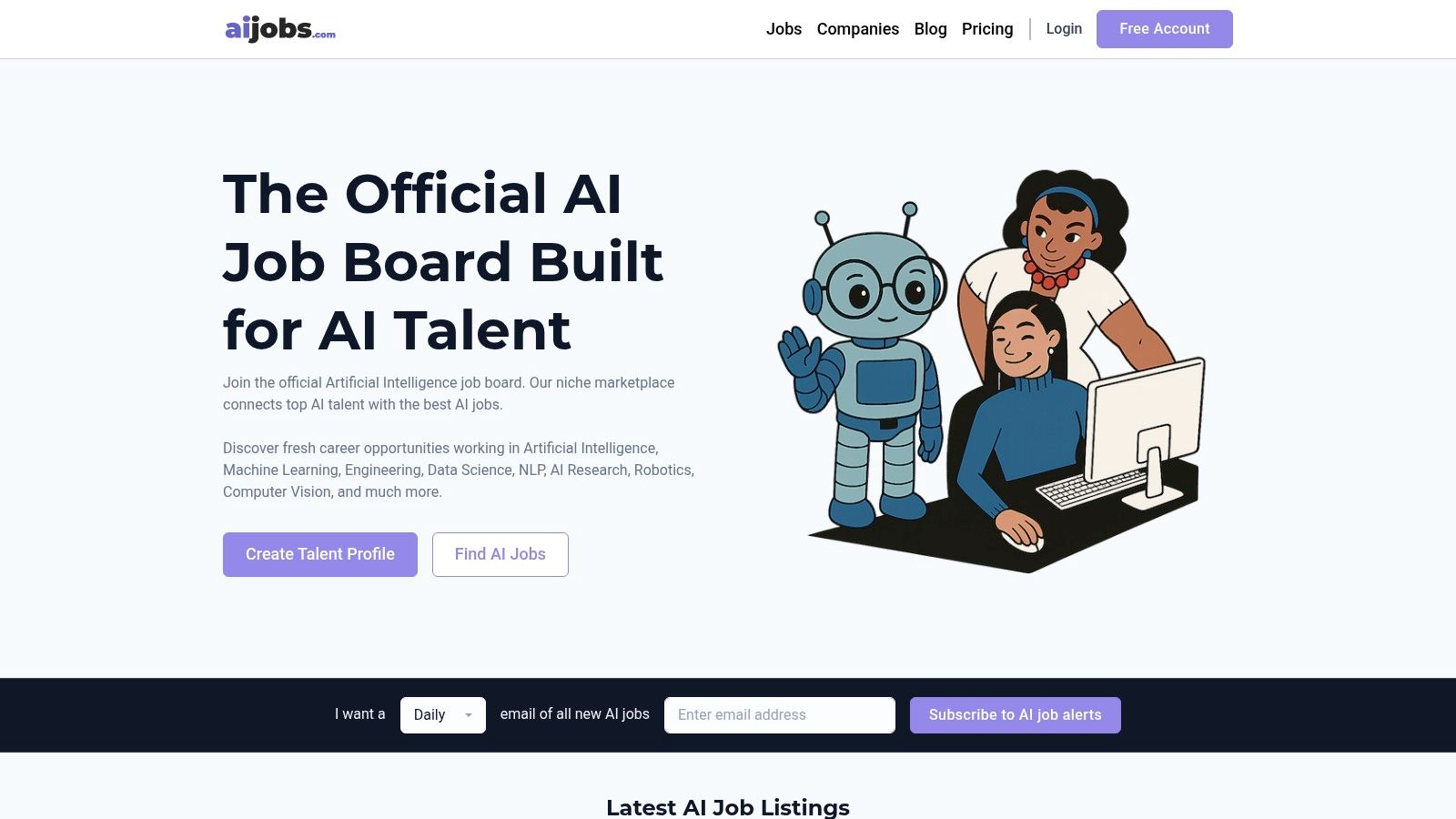
Alt text: The homepage of AI Jobs (aijobs.com) showing featured AI and machine learning jobs.
The dedicated remote-only view is a time-saver, and many postings include timestamps and salary ranges upfront. However, the overall volume is lower than giants like LinkedIn.
Practical Tips for AI Jobs
- Use Specific Category Filters: Leverage the granular categories like "Machine Learning Engineer" or "Research Scientist" to find relevant opportunities.
- Check Timestamps Regularly: The chronological feed makes it easy to spot the newest listings. Check daily to get your application in early.
- Prioritize Posts with Salary Info: Use the presence of a compensation range as an initial filter to focus on roles that meet your financial requirements.
Website: https://www.aijobs.com
11. AI Jobs (aijobs.net)
AI Jobs offers a curated feed of opportunities within the artificial intelligence ecosystem. Its primary advantage is its niche focus; you won't have to sift through irrelevant roles to find machine learning remote jobs. The platform champions a straightforward, privacy-conscious user experience.
Alt text: The job listings page of AI Jobs (aijobs.net) with filters for remote work and job categories.
The interface is minimal, allowing for quick filtering by categories like "Machine Learning" and "NLP," along with a dedicated remote filter. While its job volume is smaller than giants like LinkedIn, the quality and relevance are consistently high.
Practical Tips for AI Jobs
- Set Up Precise Alerts: Use the email alert feature for specific keywords (e.g., "Remote PyTorch Engineer") to get notified about highly relevant roles.
- Cross-Reference Company Reputations: Since the platform is more of an aggregator, always perform due diligence on the hiring company.
- Use as a Discovery Tool: The site is excellent for discovering companies actively building their AI teams, giving you a list of targets for direct outreach.
Website: https://aijobs.net
12. MachineLearningJobs.com
MachineLearningJobs.com offers a highly curated experience exclusively for roles within the machine learning ecosystem. Its key advantage is its signal-to-noise ratio; nearly every listing is relevant, saving you from sifting through poorly tagged tech roles.
The platform's dedicated "Remote" section and clear salary filters allow for a focused job hunt. While it lacks the volume of LinkedIn, the roles it lists are often from companies actively hiring for ML talent. This makes it a valuable supplement for high-quality machine learning remote jobs. To understand the responsibilities of these roles, you can learn more about what a machine learning engineer does.
Practical Tips for MachineLearningJobs.com
- Set Up Specific Alerts: Use the role-type and remote filters to create a specific search, then set up email alerts for new opportunities.
- Use Salary Data Strategically: Leverage provided salary ranges to prioritize applications and benchmark your market value.
- Prepare Your Full Application: Most listings link to the employer's ATS. Have your tailored resume and cover letter ready for the full application process.
Website: https://www.machinelearningjobs.com
Deep Dive: Trade-offs in Platform Selection
There is no single "best" platform for finding machine learning remote jobs. Your choice depends on your priorities and career goals.
- Speed vs. Volume: A platform like ThirstySprout offers speed and quality by pre-vetting candidates and roles, but has a smaller, more exclusive set of opportunities. In contrast, LinkedIn provides immense volume but requires significant effort to filter noise and stand out among thousands of applicants.
- Startup vs. Enterprise: Wellfound is the clear winner for startup roles, offering transparency on equity and direct access to founders. Dice and LinkedIn are stronger for enterprise and government roles that require specific experience or clearances.
- Signal vs. Noise: Niche boards like AI Jobs and MachineLearningJobs.com provide the highest signal, with nearly 100% relevant listings. However, their lower volume means you should use them as part of a broader strategy, not as your only source.
- Networking vs. Applying: LinkedIn's primary value is its networking capability, which can help you bypass the standard application process. Platforms like Indeed and ZipRecruiter are purely transactional application portals with no networking features.
Choosing the right platform is about aligning its strengths with your job search strategy. A blended approach is almost always the most effective.
Checklist: Your Remote ML Job Application Kit
Before you start applying, ensure your assets are production-ready. Use this checklist to prepare.
- Polished LinkedIn Profile: Headline includes target role ("Machine Learning Engineer") and key skills ("PyTorch, AWS, MLOps"). "About" section is a 2–3 sentence summary of your expertise and what you're seeking.
- Business-Focused Resume: Tailored for each application, passing the "6-second test." Highlights quantifiable achievements (e.g., "Reduced model inference time by 30%") over simple responsibilities.
- Project Portfolio (GitHub): Features 2-3 high-quality projects. Each has a detailed
README.mdexplaining the business problem, architecture, trade-offs, and outcomes (see example above). - ATS-Friendly Resume Version: A simplified version of your resume in
.docxor.pdfformat with standard fonts and no complex formatting (columns, images) to ensure it can be parsed correctly by Applicant Tracking Systems. - 30-Second Elevator Pitch: A clear, concise answer to "Tell me about yourself" that connects your background to the type of role you are targeting.
- List of Target Companies: 10-15 companies you are genuinely interested in, researched beyond their careers page.
What to Do Next
- Build Your Application Kit: Use the checklist above to refine your resume and GitHub portfolio. Focus on translating technical work into business impact. This is the most critical step.
- Implement the Tiered Search: Dedicate one week to setting up your Tier 1 and Tier 2 platforms. Create detailed profiles on ThirstySprout and Wellfound. Set up precise, daily alerts on LinkedIn and AI Jobs.
- Start Applying Strategically: For your top 5 target roles, do not use "Easy Apply." Find the hiring manager on LinkedIn, send a concise and personalized connection request, and submit your tailored application directly on the company's career site.
Ready to bypass the noise and connect directly with companies hiring senior remote AI and ML talent? ThirstySprout matches you with pre-vetted opportunities that align with your expertise. Explore our network of curated machine learning remote jobs and start a pilot in as little as two weeks.
Hire from the Top 1% Talent Network
Ready to accelerate your hiring or scale your company with our top-tier technical talent? Let's chat.