

TL;DR
- For hiring elite AI/ML talent fast, use a specialized network. ThirstySprout delivers pre-vetted senior engineers in 2–4 weeks by combining AI sourcing with expert human vetting.
- For enterprise-scale sourcing and workforce planning, use a talent intelligence platform. Eightfold AI and Beamery offer deep data and skills-based matching for large organizations.
- For augmenting an existing recruiting team, use an AI-powered sourcing tool. SeekOut and hireEZ accelerate finding and engaging passive candidates.
- For high-volume hiring automation, use a conversational AI tool. Paradox automates screening and scheduling via chat and SMS, ideal for retail or hospitality.
- Actionable next step: Define your #1 bottleneck (sourcing, screening, or speed) before choosing a tool. If your core problem is a lack of senior AI talent, prioritize a talent network over new software.
Who This Guide Is For
- CTO / Head of Engineering: You need to hire senior AI, MLOps, or data engineers quickly to hit your product roadmap, and you can't afford a 3-month search.
- Founder / Product Lead: You're scoping new AI features and need to understand the time and cost to bring in specialized talent, either full-time or on a contract basis.
- Talent Ops / Procurement: You're evaluating vendors to streamline hiring but need to see a clear ROI in terms of time-to-hire, cost, and candidate quality.
This guide is for operators who need to make a decision in weeks, not months, and see a direct business impact.
Framework: Choosing Between AI Software vs. a Talent Network
Your primary decision isn't just which software to buy, but whether software is the right solution at all. Use this framework to decide.
Bottom line: If your problem is process, buy software. If your problem is a critical talent gap, partner with a network.
Practical Example 1: Startup Needs to Hire 2 Senior MLOps Engineers
A Series B fintech startup needs to build its MLOps team to deploy a new fraud detection model. Their current process is too slow.
- Bad Approach (Software First): They spend 2 months evaluating and buying an AI sourcing tool. It takes another month for their two recruiters to get trained. They start sourcing but struggle to technically vet candidates. Result: 3 months later, they've made zero hires, and the product roadmap is delayed.
- Good Approach (Talent Network First): They partner with ThirstySprout. Within 48 hours, they receive a shortlist of 4 pre-vetted MLOps engineers who have experience shipping production systems at scale. Their CTO conducts final interviews. Result: They hire two senior engineers in 3 weeks.
Practical Example 2: Enterprise Needs to Augment Sourcing
A large e-commerce company’s 20-person talent team receives thousands of applications but struggles to find passive candidates for niche roles.
- The Problem: Their recruiters spend too much time on inbound screening and not enough on proactive outreach.
- The Solution: They implement SeekOut. They use the core platform to give their sourcers advanced search capabilities across multiple platforms. For a sudden, urgent need to hire a team of 5 security engineers, they use SeekOut’s on-demand "Spot" service to get a qualified slate delivered in 10 days without disrupting other hiring priorities.
- The Business Impact: They reduce time-to-source for niche roles by 40% and successfully staff the security team without adding permanent headcount to their recruiting team.
1. ThirstySprout
ThirstySprout operates as an AI-augmented talent network, designed for one business outcome: hiring elite, production-ready AI, ML, and data talent with maximum speed. The platform combines a proprietary machine learning sourcing engine with rigorous, human-led technical vetting to surface senior candidates who can contribute from day one.
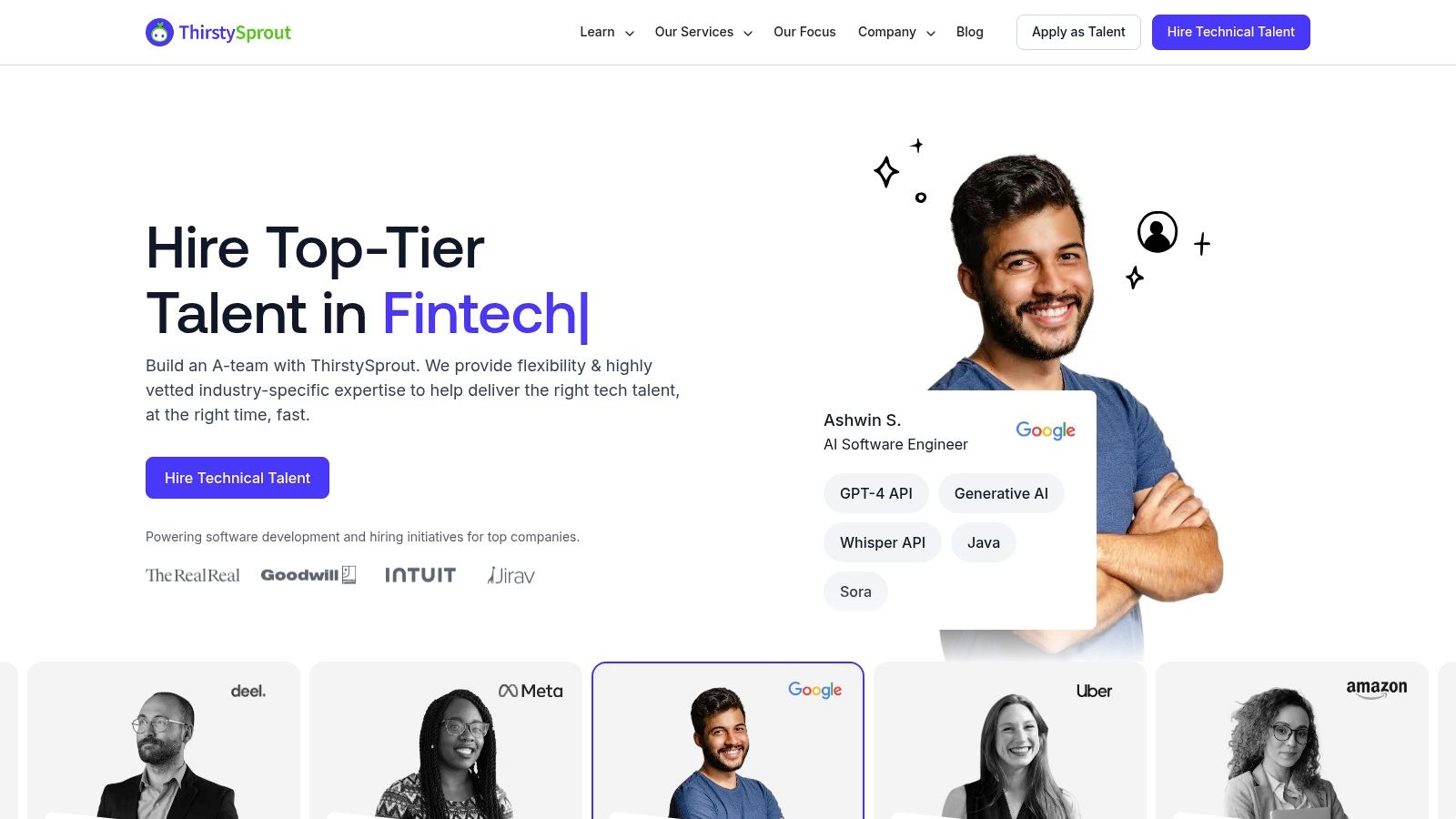
Unlike SaaS tools that leave assessment to your team, ThirstySprout delivers a pre-vetted shortlist of candidates, often within 48–72 hours. This model is effective for high-growth startups and enterprise teams needing to scale specialized functions like MLOps without a lengthy recruitment cycle. The vetting, which includes reviews by former engineering leaders from companies like Amazon and Facebook, ensures candidates have shipped production systems.
Standout Features & Differentiators
What distinguishes ThirstySprout is its flexible, outcome-focused approach.
- AI-Powered Sourcing + Human Vetting: The platform's AI prescreens millions of profiles to identify top-tier talent, which is then subjected to a multi-stage human vetting process. This filters for the top 1% of candidates.
- Flexible Engagement Models: Clients can choose full-time hires, contract-to-hire, or fully managed offshore teams via an Employer of Record (EoR) model. This is ideal for project-based needs.
- Speed to Hire: The core value is accelerating the hiring timeline from months to days. ThirstySprout handles sourcing and initial screening, so you move directly to final-stage interviews.
Pricing and Access
ThirstySprout uses a consultative approach where terms are customized based on the scope of the hiring need. This allows for flexibility that a rigid software subscription cannot offer.
Website: https://thirstysprout.com
2. Eightfold AI
Eightfold AI is a comprehensive "Talent Operating System" for large organizations. It provides an enterprise-grade platform that unifies sourcing, candidate matching, and internal mobility. Its core strength is a massive, continuously updated dataset of over 1.6 billion career profiles and 1.6 million skills, which powers its matching algorithms.
This holistic scope makes Eightfold a strategic tool for workforce planning, not just recruiting. This makes it one of the best AI recruiting software options for enterprises looking to replace multiple legacy systems with a single, data-driven platform.
Key Features & Use Cases
Eightfold excels at solving complex talent challenges at scale. Its agentic AI assistants can autonomously perform tasks like sourcing hard-to-find candidates and screening applicants against deep skill requirements.
- Best Use Case: An enterprise technology company needs to fill highly specialized roles, such as experienced AI engineers, while also identifying internal employees who can be upskilled. Eightfold's platform can simultaneously source external candidates and map internal talent to build a sustainable pipeline. You can learn more about finding such talent in our guide to hiring AI engineers.
Pros and Cons
Website: https://eightfold.ai/
3. Beamery
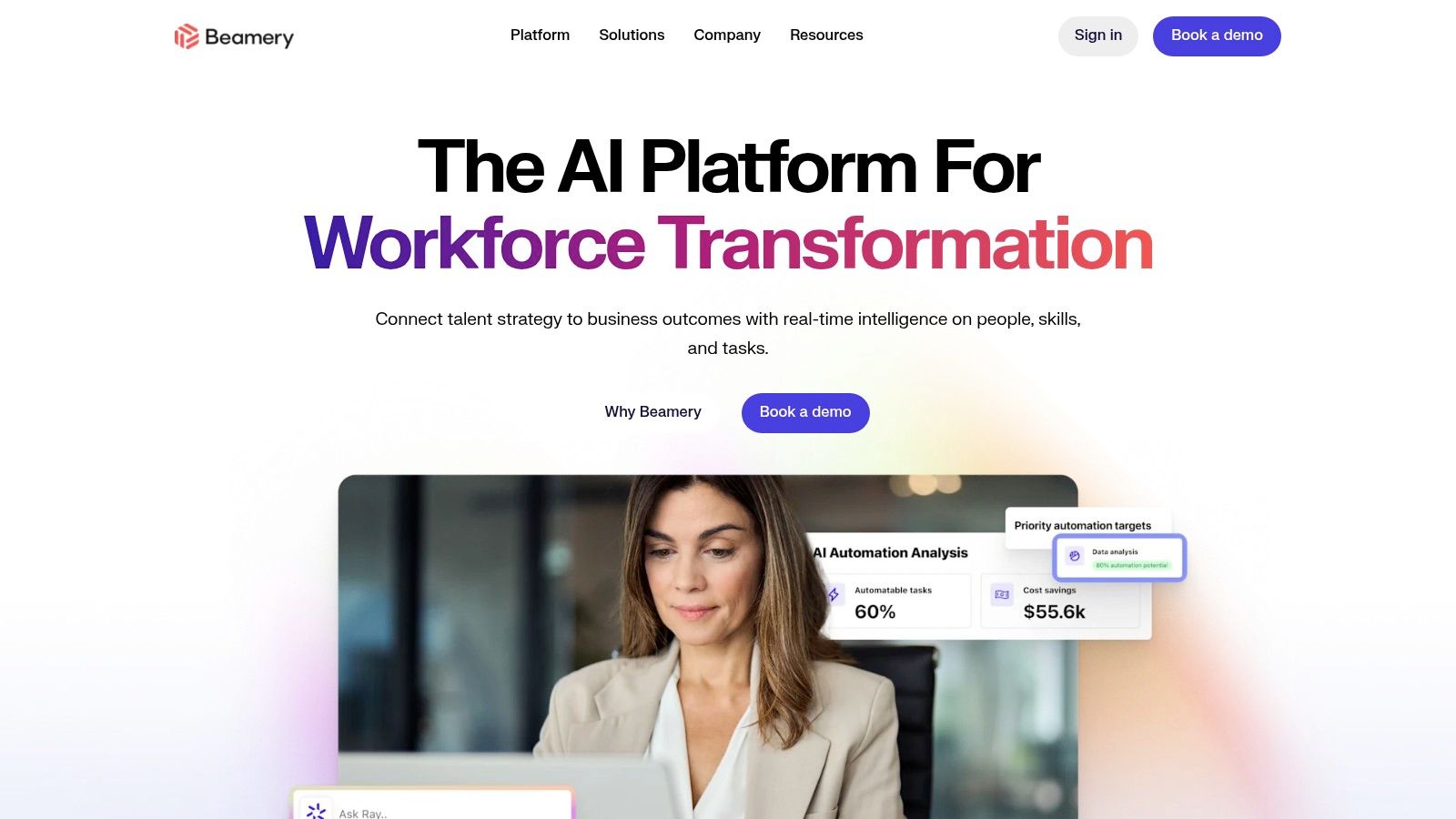
Beamery is a Talent Lifecycle Management platform focused on a skills-first approach to hiring and development. It offers an integrated suite combining a Talent CRM, career site management, and deep workforce intelligence. Its core value is creating a unified skills data platform that helps organizations understand the capabilities they have versus the skills they need.
This emphasis on a holistic, skills-based strategy differentiates Beamery from point solutions. It's designed for enterprises that need to connect external hiring with internal talent development.
Key Features & Use Cases
Beamery’s AI excels at identifying skill adjacencies and nurturing talent pipelines. Its platform provides AI-driven recommendations for both external candidates and internal employees.
- Best Use Case: A global consulting firm wants to move from a job-based hiring model to a skills-based one. Beamery can analyze the skills of their current workforce, map them to future project needs, and power an internal talent marketplace while sourcing external candidates for missing skills.
Pros and Cons
Website: https://beamery.com/
4. SeekOut
SeekOut offers a hybrid model combining a powerful AI sourcing platform with an on-demand, agentic AI recruiting service. This dual approach provides talent teams with both the software to conduct advanced searches and the option to delegate sourcing entirely. The platform’s strength is its ability to perform semantic and conversational searches across a billion-plus external profiles and a company’s own internal ATS.
Key Features & Use Cases
SeekOut excels at augmenting recruiting capacity without increasing full-time headcount. Its agentic service, SeekOut Spot, uses human-supervised AI to source, engage, and screen candidates, delivering qualified slates for hard-to-fill roles.
- Best Use Case: A fast-growing tech company needs to hire five specialized DevOps engineers. Instead of pulling their internal team off other projects, they use SeekOut Spot to get a qualified slate of candidates in under two weeks. For teams evaluating this against traditional agencies, compare approaches with our guide to the best tech recruiting agencies.
Pros and Cons
Website: https://www.seekout.com/
5. hireEZ (formerly Hiretual)
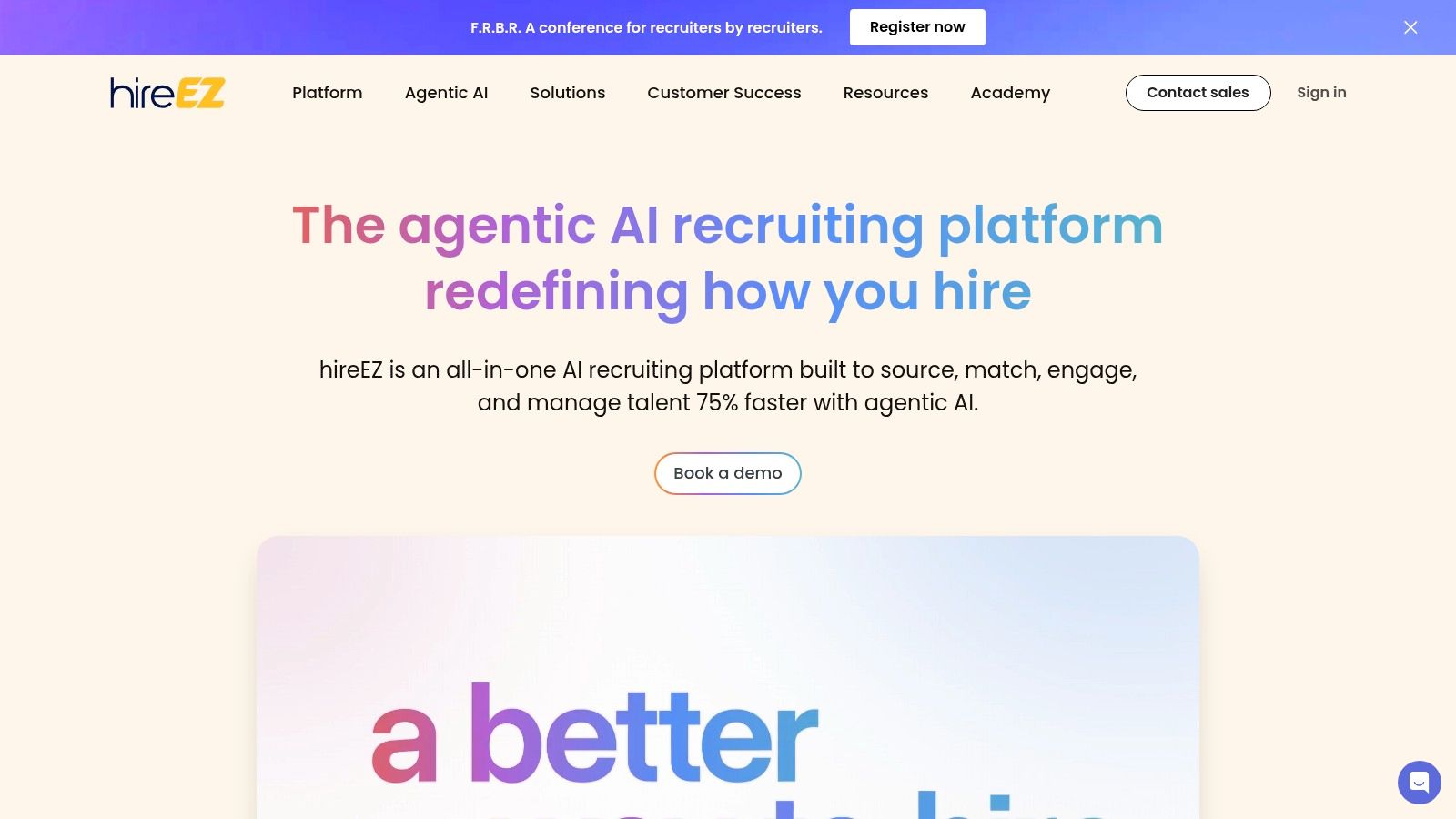
hireEZ is an agentic AI outbound recruiting platform designed for sourcing and engaging passive candidates at scale. Its primary strength is consolidating multiple outbound functions like sourcing, applicant ranking, and automated engagement into a unified system. The platform leverages AI to search the open web and a company’s own applicant tracking system (ATS) to surface qualified talent.
Key Features & Use Cases
hireEZ excels at high-volume, targeted outreach. Its ‘EZ Agent’ can autonomously source, rank, and initiate contact with candidates, while features like AI-powered phone screening accelerate the initial triage process.
- Best Use Case: A fast-growing SaaS company needs to hire multiple senior software engineers. Recruiters use hireEZ to build a pipeline by sourcing profiles from GitHub and LinkedIn, then use the built-in CRM to automate personalized multi-channel outreach, increasing response rates.
Pros and Cons
Website: https://hireez.com/
6. Paradox (Olivia)
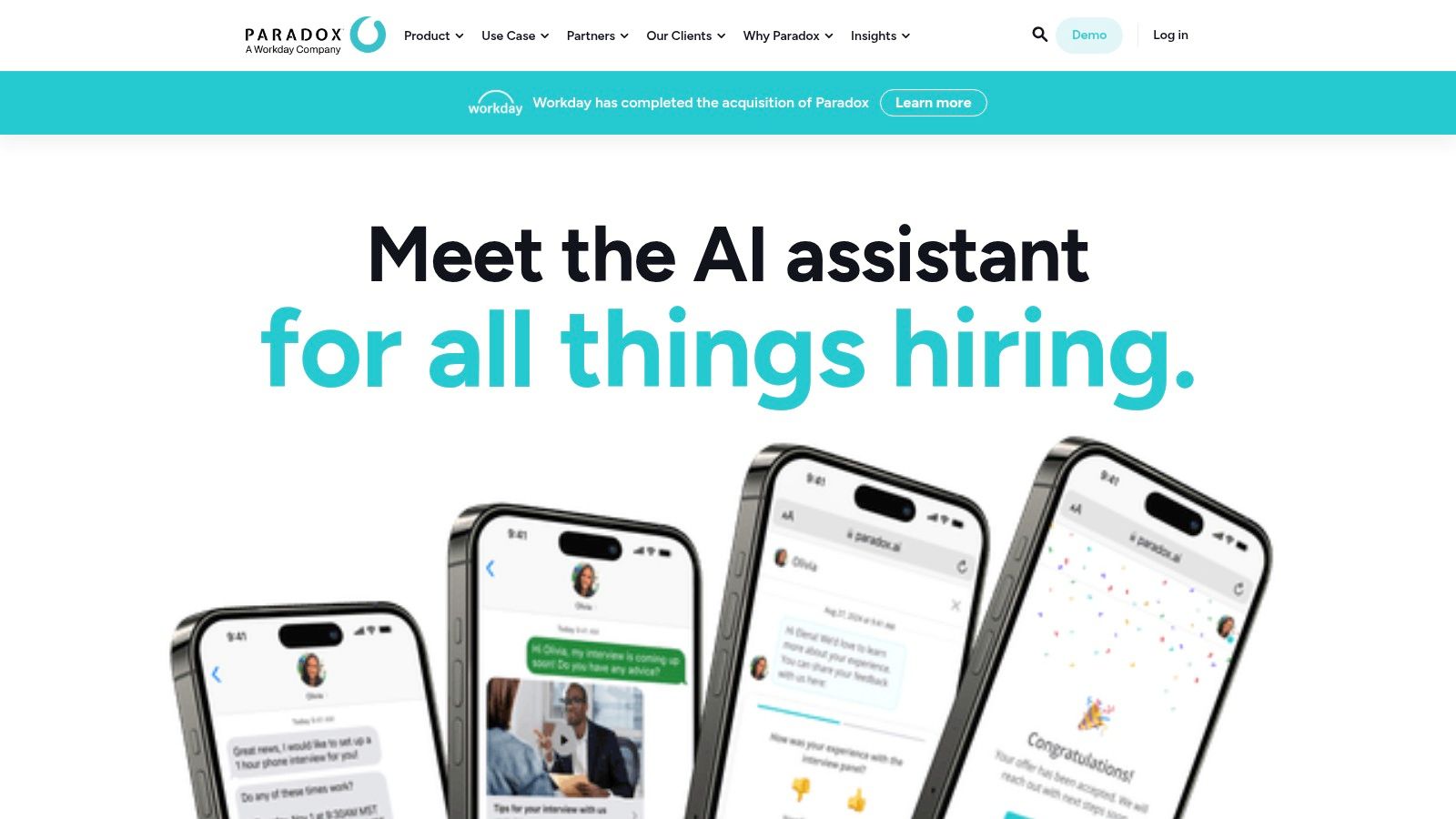
Paradox, with its AI assistant Olivia, automates high-volume hiring processes through conversational AI. It is engineered for industries like retail, hospitality, and healthcare where speed and candidate experience are critical. The platform uses a chat- and SMS-first approach to engage, screen, and schedule candidates, reducing the administrative burden on recruiting teams. For more on this technology, see our overview of HR chatbots.
Key Features & Use Cases
Paradox excels by meeting candidates on mobile devices to provide instant responses. Olivia can answer common questions, screen for basic qualifications, and integrate directly with calendars to schedule interviews 24/7 without recruiter intervention.
- Best Use Case: A national quick-service restaurant chain needs to continuously hire crew members across 500 locations. Olivia can be embedded on their career site and use SMS to engage applicants, pre-screen them, and automatically schedule interviews with local managers, reducing the hiring cycle from weeks to days.
Pros and Cons
Website: https://www.paradox.ai/
7. SmartRecruiters
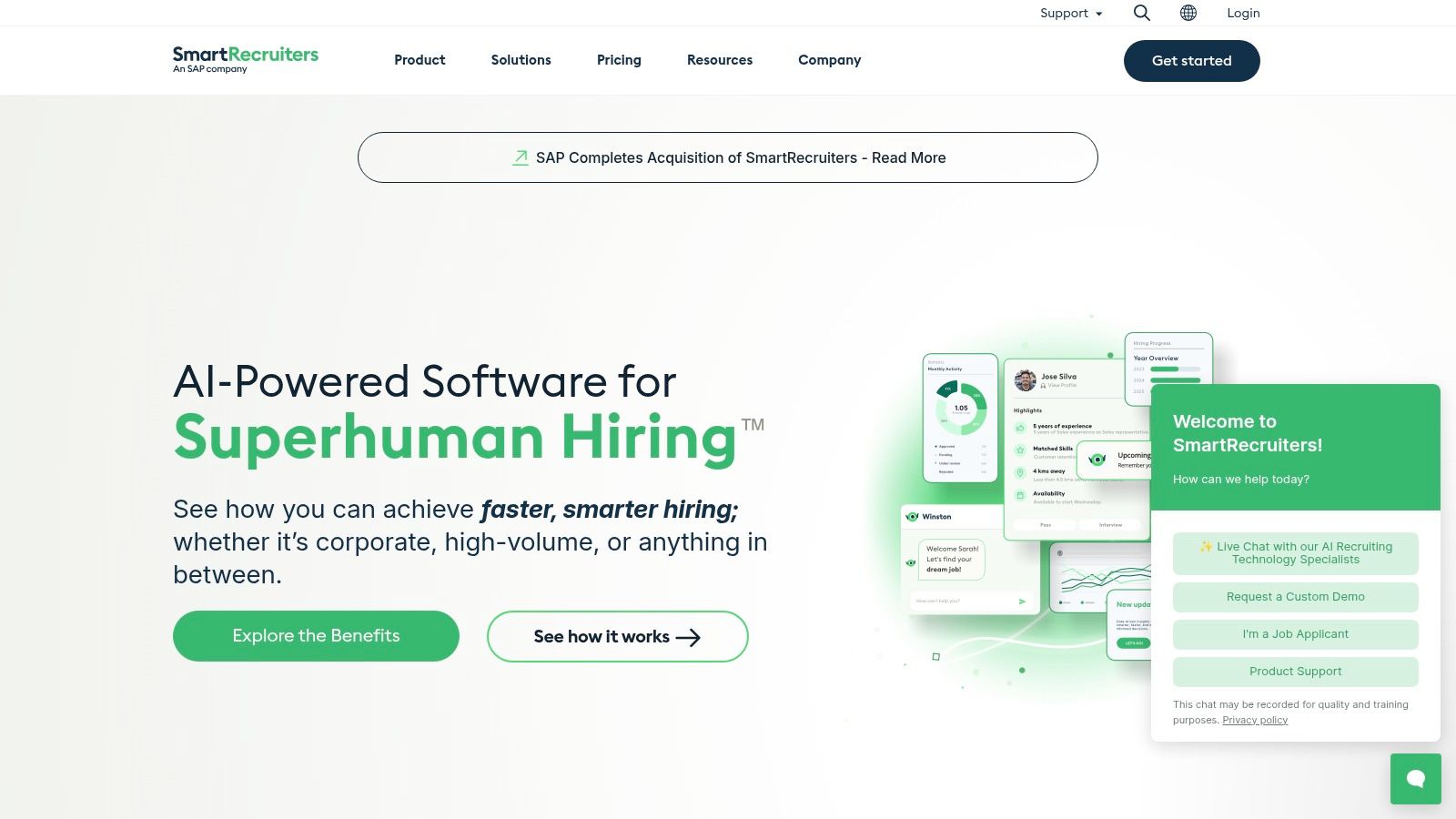
SmartRecruiters offers a comprehensive talent acquisition suite that natively embeds AI features, positioning itself as an all-in-one platform for mid-market to enterprise organizations. It builds AI directly into its core Applicant Tracking System (ATS) and Candidate Relationship Management (CRM) functionalities. Its standout features, SmartAssistant and Winston Intelligence, automate key stages of the hiring funnel.
Key Features & Use Cases
SmartRecruiters streamlines high-volume hiring by embedding AI-driven efficiency directly into recruiter workflows. The platform's AI handles repetitive tasks like initial resume screening and scheduling.
- Best Use Case: A fast-growing mid-market company receives hundreds of applications and needs to quickly identify top candidates. SmartRecruiters' AI-powered screening can automatically score and shortlist applicants, while its chatbot engages candidates and assists with scheduling.
Pros and Cons
Website: https://www.smartrecruiters.com/
8. Greenhouse
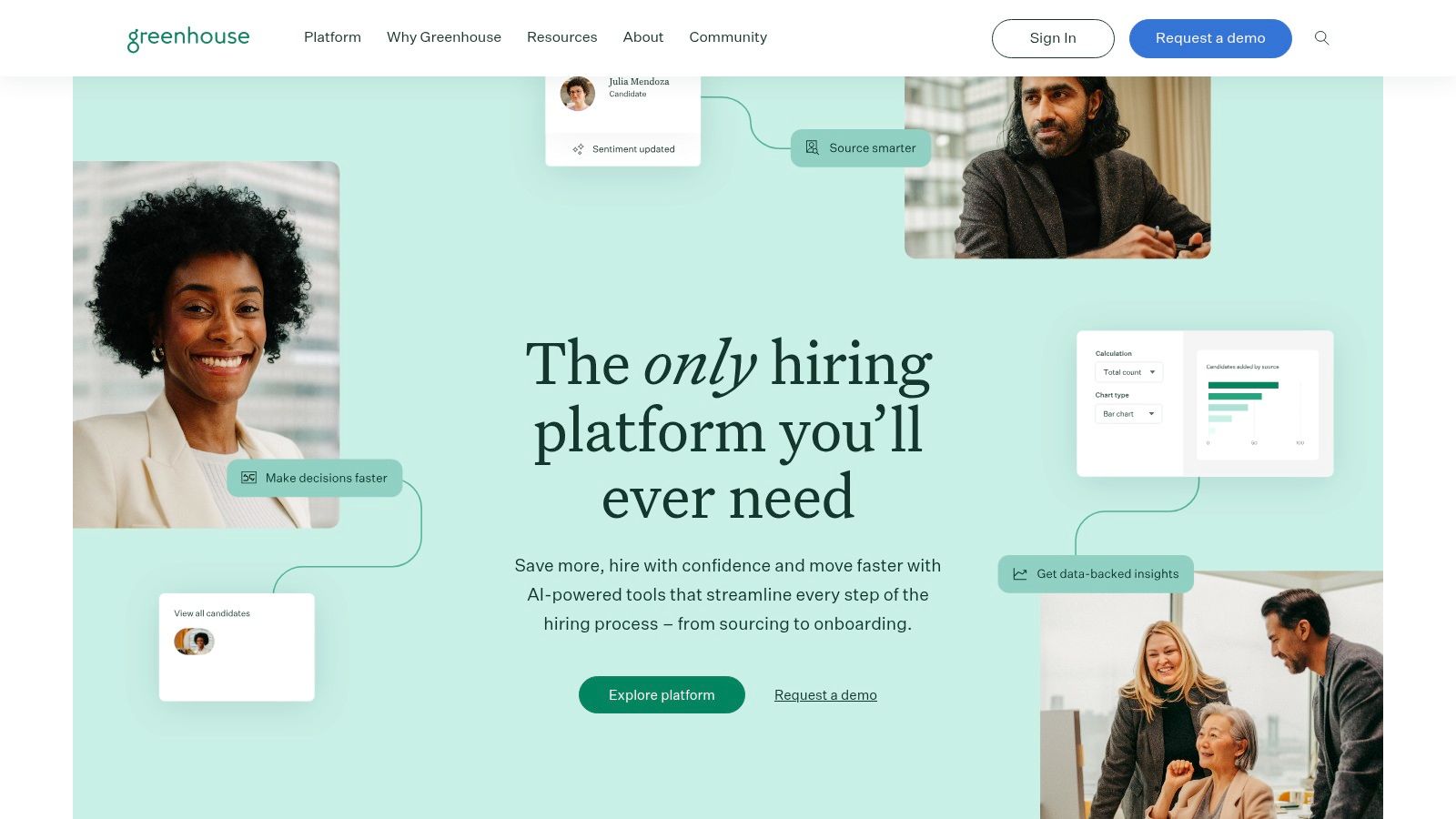
Greenhouse is a widely adopted Applicant Tracking System (ATS), favored by high-growth tech companies. It functions as a comprehensive hiring platform that is progressively embedding AI to streamline its core workflows. The platform's strength is its commitment to structured, fair, and compliant hiring processes.
Greenhouse's AI features focus on practical tasks like summarizing interview feedback and filtering fraudulent applications. This makes it a great choice for organizations that need a robust, central hiring system with intelligent features built directly into their existing process.
Key Features & Use Cases
Greenhouse excels at augmenting established, structured hiring workflows with targeted AI assistance. Its features save recruiters and hiring managers time on manual review, allowing them to focus on high-value interactions.
- Best Use Case: A Series C fintech company needs to accelerate hiring for multiple engineering and product roles. Recruiters use Greenhouse's AI to auto-generate interview questions, and hiring managers use scorecard summaries to quickly digest feedback from a multi-stage interview panel.
Pros and Cons
Website: https://www.greenhouse.com/
9. Lever (by Employ)
Lever is a modern, collaborative Applicant Tracking System (ATS) and Candidate Relationship Management (CRM) platform for high-growth companies. Lever embeds AI "companions" directly into the core recruiting workflow to reduce administrative tasks and enhance decision-making. This approach focuses on making recruiters more efficient rather than replacing their judgment.
Key Features & Use Cases
Lever’s AI functionality shines in its ability to automate post-interview tasks and provide at-a-glance candidate insights. The platform’s AI can generate interview transcripts and summaries, screen applicants, and surface candidate recommendations.
- Best Use Case: A Series B tech startup needs to rapidly scale its engineering team. Lever’s AI can transcribe technical interviews and provide summaries, allowing managers to quickly review candidate discussions. The AI recommendations also help recruiters prioritize applicants.
Pros and Cons
Website: https://www.lever.co/
10. Ashby
Ashby is a modern, all-in-one recruiting platform that combines a full-featured Applicant Tracking System (ATS) with powerful analytics and AI-driven automation. Favored by high-growth startups, it streamlines the entire hiring process from sourcing to reporting. Its key differentiator is offering an end-to-end solution with transparent pricing.
Key Features & Use Cases
Ashby integrates AI to automate repetitive tasks like scheduling, sourcing, and reporting. Its standout feature is its powerful analytics suite, which can even be purchased as a standalone product to layer on top of an existing ATS.
- Best Use Case: A Series A startup needs to replace disconnected spreadsheets with a unified system. Ashby allows them to manage candidates, automate interview scheduling, and generate detailed reports on time-to-hire and source effectiveness in a single platform.
Pros and Cons
Website: https://www.ashbyhq.com/
11. Workable
Workable is an all-in-one Applicant Tracking System (ATS) and recruiting software designed for small to mid-market companies. It distinguishes itself with a user-friendly interface, transparent pricing, and rapid implementation. Workable embeds AI to automate high-volume tasks like sourcing candidates from its internal database and distributing job posts.
Key Features & Use Cases
Workable's strength is streamlining the hiring workflow for teams that need to move fast. Its AI sourcing, one-click job posting, and automated communication tools help recruiters manage a large inbound candidate pipeline efficiently.
- Best Use Case: A Series A startup needs to hire 15 new roles in the next quarter. The team can use Workable to post all jobs instantly, use its AI Recruiter to find matching profiles from past applicants, and automate interview scheduling without a lengthy setup.
Pros and Cons
Website: https://www.workable.com/
12. G2 (AI Recruiting Software category)
G2 serves as a crucial meta-resource for researching the AI recruiting software market. It aggregates user-generated reviews, product data, and comparison tools for hundreds of vendors. For leaders creating a shortlist, G2 provides an essential first pass, allowing them to filter options by company size, user satisfaction, and specific features.
This data-driven approach allows you to validate vendor marketing claims against real-world user experiences. By analyzing detailed reviews, you can uncover common pain points and integration challenges. This makes it a great starting point for any team evaluating AI recruiting software.
Key Features & Use Cases
G2 is not a direct recruiting tool but a strategic evaluation platform. Its primary function is to accelerate vendor discovery and due diligence by consolidating market intelligence and peer reviews.
- Best Use Case: A Head of Talent at a Series B startup is tasked with selecting an AI-powered sourcing tool. They can use G2 to filter the "AI Recruiting" category for vendors with high satisfaction ratings from mid-market companies and create a data-backed shortlist of 3-5 vendors.
Pros and Cons
Website: https://www.g2.com/categories/ai-recruiting
AI Recruiting Software Selection Checklist
Use this checklist to evaluate potential software vendors and ensure you make a data-driven decision that aligns with your business goals.
1. Problem Definition & Business Case
- What is the #1 hiring bottleneck we need to solve? (e.g., sourcing speed, screening volume, interview scheduling)
- What is the business impact of solving this? (e.g., faster time-to-hire for engineers, reduced cost-per-hire)
- What is our realistic budget for the first year (license + implementation)?
- Who is the economic buyer, and who are the end-users?
2. Functional Requirements
- Does it integrate with our current ATS (e.g., Greenhouse, Lever)?
- Does it support our core use case (e.g., passive sourcing, inbound screening, internal mobility)?
- Does it meet our security, privacy, and compliance requirements (GDPR, CCPA)?
- How does the AI address and mitigate potential bias?
3. Vendor Evaluation
- Have we scheduled demos with 2-3 shortlisted vendors?
- Have we asked for a reference customer with a similar profile to ours?
- What does implementation and onboarding look like (timeline, resources required)?
- What is the support model (dedicated CSM, email support, etc.)?
What to Do Next
The fundamental choice isn't if you should adopt AI but how. The right tool depends entirely on your specific bottleneck. A Series A startup needing its first three ML engineers has vastly different needs than an enterprise managing thousands of applicants.
No single platform is a silver bullet. The most successful implementations involve a phased approach. Start by identifying the most painful part of your hiring process. Choose a tool that directly addresses that pain point, and set clear success metrics before you begin.
Your Action Plan in 3 Steps
- Define Your Core Problem: Use the checklist above. Is your primary challenge sourcing passive candidates, screening inbound applications, or scheduling interviews? Define a realistic budget.
- Shortlist and Run Targeted Demos: Based on your problem, select 2-3 vendors from this list. During the demos, come prepared with specific use cases. Ask, "Show me exactly how your platform would identify machine learning engineers with experience in both PyTorch and production-level RAG systems."
- Evaluate the "Tool vs. Talent Network" Trade-Off: For many tech companies, the bottleneck isn’t process efficiency; it’s a critical shortage of senior, specialized AI talent. If your immediate goal is to hire a Staff AI Engineer in the next 4–8 weeks, implementing new software is a distraction. Partnering directly with a specialized talent network is the more strategic move.
The goal of integrating AI is to make your team more human, not less. It's about automating repetitive tasks so you can focus on building relationships and assessing nuanced skills.
If your most pressing need is hiring elite, vetted AI and machine learning engineers, a new software platform isn't the fastest path. ThirstySprout provides direct access to a network of top-tier, passive AI talent, allowing you to see curated profiles in 48 hours.
Book a 20-minute scoping call to bypass the sourcing grind and connect directly with your next key hire.
Hire from the Top 1% Talent Network
Ready to accelerate your hiring or scale your company with our top-tier technical talent? Let's chat.