

TL;DR: Yes, most software engineers can work from home effectively, especially senior, DevOps, and data engineers. Success depends on intentional remote-first processes, not just location. For junior engineers or roles needing specialized hardware, a hybrid model is often better. Focus on asynchronous communication, outcome-based metrics (like cycle time), and a structured onboarding plan.
Who this is for:
- CTO / Head of Engineering: Deciding on a remote work policy and hiring strategy.
- Founder / Product Lead: Scoping roles for a distributed team.
- Talent Ops: Understanding the risks and requirements of hiring remote engineers.
Quick Answer: A Framework for Deciding
Can a software engineer work from home? The answer is a clear yes, but the better question is which engineers and under what conditions. Remote work is now the default expectation for top talent, opening a global hiring pool but requiring a deliberate strategy.
The decision between fully remote, hybrid, or in-office models depends on three key factors: role seniority, project type, and security constraints. Senior engineers working on cloud-native applications are ideal for remote work. Junior engineers or teams requiring physical hardware benefit from a hybrid or in-office structure.

alt text: Flowchart illustrating key factors determining if an engineer can work from home based on seniority, project type, and security needs.
Remote vs. Hybrid vs. In-Office: A Comparison
Each model has trade-offs impacting talent access, cost, and collaboration. The right choice depends on your company's culture, product, and growth stage.
Practical Examples: How Remote Engineering Teams Work
Theory is one thing; execution is another. A high-performing remote team doesn’t just happen—it’s built with intentional processes and the right tools. Here are two real-world examples.
Example 1: The All-Remote AI Startup
A Series A startup needed to build an MLOps team for its flagship AI product. To access a niche talent pool and move faster than competitors, they committed to a fully remote model. Their success was built on asynchronous communication and focusing on outcomes, not hours worked.
Their operational toolkit:
- Communication: Slack for quick, async updates. A "public by default" channel policy built a searchable knowledge base.
- Project Management: Jira with a strict policy that every ticket required a clear definition of "done" to eliminate ambiguity.
- CI/CD: GitHub Actions automated their model deployment pipelines, enforcing peer review and testing for every change.
Business Impact: By going remote-first, they cut their time-to-hire by 40% and launched their product three months ahead of schedule. For companies needing specialized skills quickly, software development team augmentation offers a similar strategic advantage.
Example 2: The Hybrid Mid-Sized Tech Company
A mid-sized company with a strong office culture moved to a hybrid model to attract senior platform engineers. Initially, remote engineers felt disconnected from decisions made in impromptu office conversations.
To solve this, leadership implemented a structured hybrid framework:
- Structured On-Site Days: Tuesdays and Thursdays were designated for in-person collaboration like sprint planning and whiteboarding.
- "Remote-First" Meeting Rule: This was the game-changer. If one person joined remotely, everyone joined from their own laptop. This leveled the communication playing field and eliminated side conversations.
Business Impact: This intentional structure boosted retention for senior engineers by 15% and allowed them to ship major platform upgrades without sacrificing their collaborative culture.
Deep Dive: Which Engineering Roles Excel Remotely?
Not all software engineering roles are equally suited for remote work. Success depends on the role's core tasks, dependencies, and communication patterns. Some roles thrive on deep, focused work, while others require physical hardware or high-bandwidth, in-person mentorship.
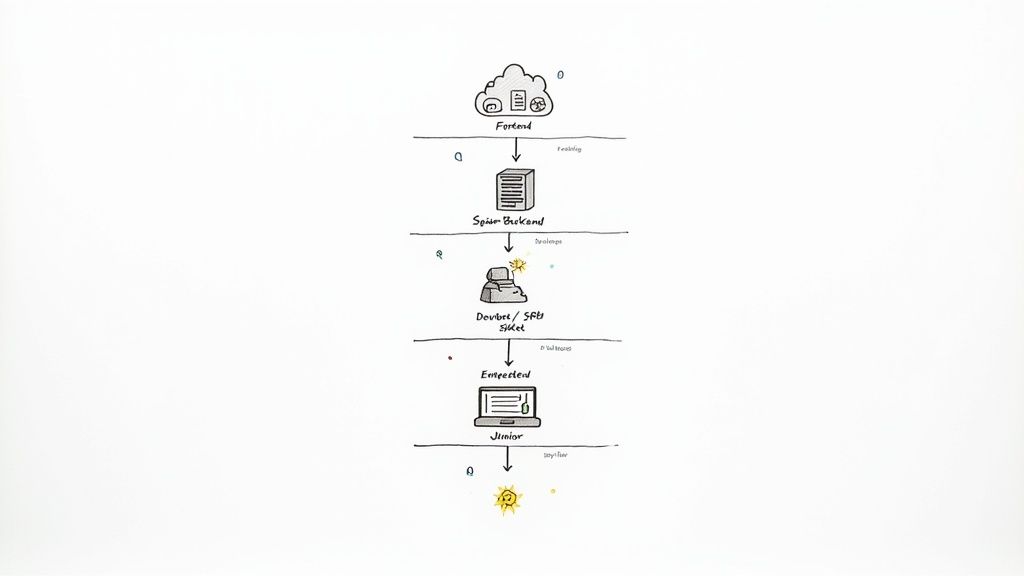
alt text: A diagram illustrating a software engineering workflow from frontend development to junior engineer contributions, suitable for remote work.
Highly Remote-Friendly Roles
These roles are ideal for remote work due to their cloud-native toolchains and asynchronous workflows.
- Senior Backend and API Engineers: Their work involves deep focus on system design and coding discrete services, benefiting from uninterrupted time.
- DevOps, SRE, and MLOps Engineers: They operate almost exclusively in the cloud, managing infrastructure-as-code and CI/CD pipelines with tools like Kubernetes, Terraform, and GitHub Actions.
- Data Engineers and Scientists: Their work is centered in cloud platforms like Snowflake or Databricks, collaborating via shared notebooks and version control.
- Frontend Engineers (with established design systems): With a mature component library, they can efficiently build UIs from anywhere.
These roles fit into the broader landscape of jobs in software engineering.
Roles That Need an Office (At Least Sometimes)
Some roles are more effective with physical presence due to hardware needs, security protocols, or the need for intense, hands-on collaboration.
- Embedded Systems and Hardware Engineers: Debugging firmware or new hardware requires physical access to prototype boards, oscilloscopes, and logic analyzers. You can't probe a circuit board over Zoom.
- Junior Engineers: They benefit immensely from the high-bandwidth, informal learning that happens in person, like spontaneous pair programming and quick "shoulder tap" questions.
- Engineers on Air-Gapped Systems: Work on highly classified government or financial projects often legally requires being inside a secure facility with no outside network connection.
- Early-Stage Product Discovery Roles: While tools like Miro are excellent, some unstructured brainstorming sessions benefit from the energy of a team in a room with a whiteboard.

alt text: A diagram illustrating a software interface connected to various system components, representing the abstract nature of remote-friendly work.
Checklist: Building a High-Performance Remote Engineering Culture
Letting an engineer work from home is the easy part. Creating an environment where they excel requires redesigning how your team operates. A high-performance remote culture is built on purpose.
1. Redefine Productivity
Shift from tracking "hours at a desk" to measuring outcomes that deliver business value.
- Measure Cycle Time: How long does it take for an idea to go from first commit to production? This is your true measure of velocity.
- Track Deployment Frequency: How often do you ship code? High-performing teams release small, frequent batches to reduce risk.
- Monitor Code Quality: Use metrics like bug rates and code coverage to prevent technical debt.
- Connect to Business Impact: Directly link engineering work to KPIs like user adoption or system uptime.
2. Establish Clear Communication Norms
In a remote team, ambiguity kills productivity. Protect deep work by establishing clear rules of engagement. A core principle is "asynchronous by default, synchronous by necessity."
- Asynchronous (Jira, Docs): Use for non-urgent, detailed work like proposals and code reviews. This creates a searchable record.
- Semi-Synchronous (Slack): Use for quick questions that unblock teammates.
- Synchronous (Video Calls): Reserve for high-stakes collaboration like 1-on-1s, strategic planning, and complex problem-solving.
3. Proactively Tackle Burnout and Isolation
Remote work offers flexibility but introduces risks of burnout and disconnection. Leaders must actively build a culture of support. For more details, explore remote work trends and challenges.
- Organize Virtual Social Events: Schedule online game sessions or virtual coffee chats to build personal connections.
- Implement Structured Mentorship: Pair junior and senior engineers for regular check-ins.
- Document Career Paths: Ensure promotion criteria are transparent and accessible to everyone, regardless of location.
- Model "Off" Time: Leaders must set the example by taking vacations and logging off completely to respect personal time.
How to Hire and Compensate Remote Engineers
Accessing a global talent pool is a major benefit of remote work, with data on the rise of remote work showing its increasing prevalence. However, it requires a thoughtful approach to hiring and compensation.
Choosing Your Compensation Strategy
You have three primary models for compensating a distributed team. The right choice depends on your budget, hiring goals, and commitment to pay equity.
- Location-Based Pay: Salaries are tied to local market rates. Most budget-friendly but can create fairness issues.
- Regional Pay Bands: A single pay scale for a large region (e.g., North America). Balances fairness and cost.
- Single Global Rate: Everyone in the same role earns the same salary, regardless of location. The gold standard for equity but also the most expensive.
Evaluating Remote Candidates
Success in a remote role depends on more than just technical skills. Your interview process must screen for remote-first traits.
Sample Interview Questions:
- To test written communication: "Walk me through the last time you explained a complex technical concept to a non-technical stakeholder entirely in writing. How did you structure the document, and what was the outcome?"
- To test autonomy: "Describe a time you were blocked on a task and your manager was unavailable. What specific steps did you take to unblock yourself?"
- To test async collaboration: "Tell me about a significant code review you participated in. What made the feedback effective, and how did you handle a disagreement that occurred only in GitHub comments?"
Template: Your Remote Engineer Onboarding Plan
A structured onboarding process is critical for setting a new remote engineer up for success. The first 90 days determine their long-term engagement and productivity. This isn't just HR paperwork; it's a strategic plan to integrate them into the team. For more best practices, consider streamlining your employee onboarding process.
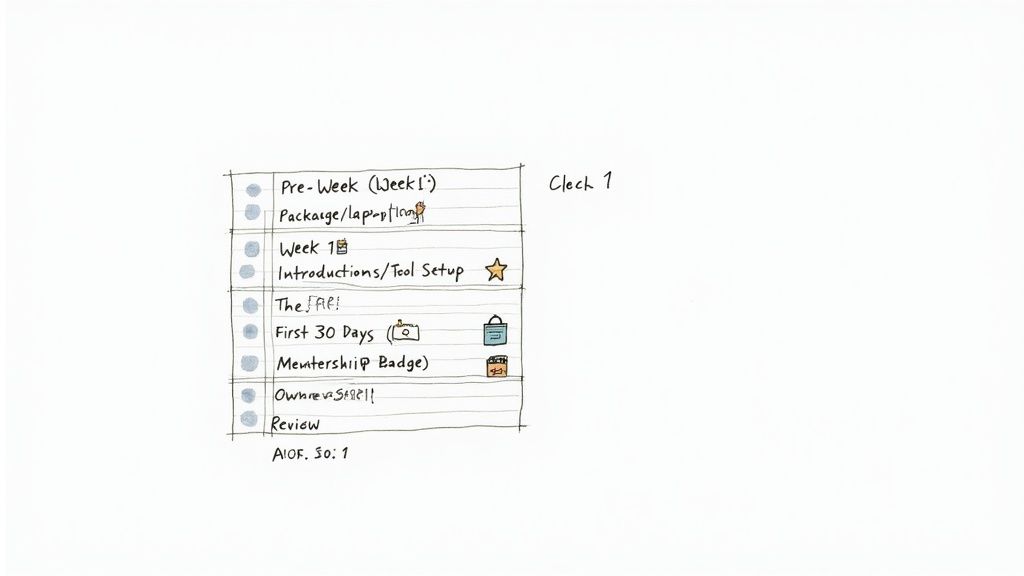
alt text: A checklist for onboarding a remote software engineer covering pre-week setup, first 30 days, and performance review.
90-Day Remote Engineer Onboarding Checklist
What To Do Next
Building a high-performing distributed team is an intentional act. Here are three steps you can take today.
- Audit Your Roles: Map your current engineering roles against the remote-suitability framework. Identify which are prime for remote work and which need a hybrid approach.
- Draft Your Remote Playbook: Document your communication rules, meeting etiquette, and onboarding process. A written playbook eliminates ambiguity and ensures consistency.
- Run a Pilot Project: The fastest way to validate your strategy is to test it. Let us help you assemble a pre-vetted remote team for a well-defined project. You'll gain more practical insights in two weeks than in two months of planning.
Ready to access a global pool of elite AI and software engineers? ThirstySprout helps you build remote teams with confidence.
Hire from the Top 1% Talent Network
Ready to accelerate your hiring or scale your company with our top-tier technical talent? Let's chat.